
Granite waa nooc ka mid ah dhagaxa igneous ee laga qoday xooggiisa aadka u daran, cufnaanta, adkeysiga, iyo iska caabbinta miridhku. Laakiin granite sidoo kale waa mid aad u badan - ma aha oo kaliya labajibbaaranayaasha iyo leydiyada! Xaqiiqdii, waxaan si kalsooni leh ula shaqeynaa qaybaha granite-ka ee lagu farsameeyay qaababka, xaglaha, iyo qaloocyada dhammaan noocyada kala duwan si joogto ah - iyadoo natiijooyin aad u wanaagsan la helayo.
Iyada oo loo marayo habka farsamaynta ee heerkeenna ah, meelaha la jaray waxay noqon karaan kuwo aad u siman. Tayadani waxay ka dhigayaan granite-ka agabka ugu habboon ee lagu abuuri karo saldhigyada mashiinka cabbirka gaarka ah iyo kuwa gaarka ah iyo qaybaha mitirka. Granite waa:
■ la farsamayn karo
■ si sax ah u siman marka la jaro oo la dhammeeyo
■ u adkaysta miridhku
■ waara
■ waara oo waara
Qaybaha granite-ka sidoo kale way fududahay in la nadiifiyo. Markaad samaynayso naqshado gaar ah, hubi inaad doorato granite faa'iidooyinkeeda sare.
HEERARKA / CODSIYADA SAREEYA
Granite-ka uu ZHHIMG u isticmaalo alaabtayada saxanka dusha sare ee caadiga ah wuxuu leeyahay heer sare oo quartz ah, kaas oo bixiya iska caabin weyn oo ku saabsan xirashada iyo dhaawaca. Midabadayada Madow ee Sare waxay leeyihiin heer nuugista biyaha oo hooseeya, taasoo yaraynaysa suurtagalnimada in cabbirada saxda ah ee miridhku ay daxalaadaan marka ay ku dheggan yihiin saxannada. Midabada granite-ka ee uu bixiyo ZHHIMG waxay keenaan iftiin yar, taasoo la macno ah in indhaha oo yaraada ay dadka isticmaala saxannada isticmaalaan. Waxaan doorannay noocyada granite-ka annaga oo ka fiirsanayna ballaarinta kulaylka si aan u yareyno dhinacan.
CODSIYADA GAARKA AH
Marka codsigaagu u baahdo saxan leh qaabab gaar ah, meelo lagu dhejiyo, godad ama qalab kale oo farsamayn ah, waxaad u baahan doontaa inaad doorato qalab sida Black Jinan Black. Maaddadan dabiiciga ah waxay bixisaa adkeysi sare, yareynta gariirka oo aad u fiican, iyo hagaajin ku habboonaanta mashiinka.
Waa muhiim in la ogaado in midabka kaliya uusan ahayn tilmaame muujinaya tayada jireed ee dhagaxa. Guud ahaan, midabka granite-ku wuxuu si toos ah ula xiriiraa joogitaanka ama maqnaanshaha macdanta, taas oo laga yaabo inaysan saameyn ku yeelan tayada sameeya walaxda saxanka dusha sare ee wanaagsan. Waxaa jira granite casaan, cawl, iyo madow oo aad ugu fiican saxanka dusha sare, iyo sidoo kale granite madow, cawl, iyo casaan ah oo gebi ahaanba aan ku habboonayn codsiyada saxda ah. Astaamaha muhiimka ah ee granite-ka, maadaama ay khuseeyaan isticmaalkeeda sida walaxda saxanka dusha sare, wax xiriir ah lama lahan midabka, waana kuwan soo socda:
■ Adkaanta (leexashada culayska hoos yimaada - oo ay tilmaamayso Modulus of Elasticity)
■ Adkaanta
■ Cufnaanta
■ Iska caabinta xirashada
■ Xasilloonida
■ Daloolada
Waxaan tijaabinay walxo badan oo granite ah waxaanan isbarbar dhignay walxahan. Ugu dambeyntii waxaan helnay natiijada, granite madow ee Jinan waa walaxda ugu fiican ee aan waligay naqaanno. Granite madow ee Hindiya iyo granite-ka Koonfur Afrika waxay la mid yihiin Jinan Black Granite, laakiin sifooyinkooda jireed way ka yar yihiin Jinan Black Granite. ZHHIMG waxay sii wadi doontaa raadinta walxo granite ah oo badan adduunka waxayna isbarbar dhigi doontaa sifooyinkooda jireed.
Si aad wax badan uga hadasho granite-ka ku habboon mashruucaaga, fadlan nala soo xiriirinfo@zhhimg.com.
Soosaarayaal kala duwan ayaa isticmaala heerar kala duwan. Waxaa jira heerar badan oo adduunka ah.
Heerka DIN, ASME B89.3.7-2013 ama Tilmaamaha Federaalka GGG-P-463c (Taarikada Dusha Sare ee Granite) iyo wixii la mid ah oo saldhig u ah qeexitaankooda.
Waxaanan soo saari karnaa saxanka kormeerka saxda ah ee granite iyadoo loo eegayo baahiyahaaga. Soo dhawoow si aad nala soo xiriirto haddii aad rabto inaad ogaato macluumaad dheeraad ah oo ku saabsan heerarka dheeraadka ah.
Fidsanaan waxaa loo tixgelin karaa inay tahay dhammaan qodobbada dusha sare ee ku jira laba diyaaradood oo is barbar socda, diyaaradda salka iyo diyaaradda saqafka. Cabbiraadda masaafada u dhaxaysa diyaaradaha waa fidsanaan guud ee dusha sare. Cabbiraaddan fidsanaantu waxay caadi ahaan wadataa dulqaad waxayna ku jiri kartaa calaamadayn darajo.
Tusaale ahaan, dulqaadka fidsan ee saddex darajo oo caadi ah ayaa lagu qeexay qeexitaanka federaalka sida lagu go'aamiyay qaacidada soo socota:
■ Heerka Shaybaarka AA = (40 + labajibbaarane oo geesood ah/25) x .000001" (hal dhinac)
■ Kormeerka Darajada A = Darajada Shaybaarka AA x 2
■ Qolka Qalabka Darajada B = Darajada Shaybaarka AA x 4.
Taarikada dusha sare ee cabbirka caadiga ah, waxaan dammaanad qaadaynaa dulqaadka fidsanaan ee ka sarreeya shuruudaha qeexitaankan. Marka laga soo tago fidsanaan, ASME B89.3.7-2013 & Faahfaahinta Federaalka GGG-P-463c waxay wax ka qabtaan mowduucyada ay ka mid yihiin: saxnaanta cabbirka ku celcelinta, sifooyinka walxaha ee granites-ka saxanka dusha sare, dhammaystirka dusha sare, goobta taageerada, adkaanta, hababka kormeerka ee la aqbali karo, rakibidda gelinta dunta leh, iwm.
Saxannada dusha sare ee granite-ka ZHHIMG iyo saxamada kormeerka granite-ka waxay buuxiyaan ama dhaafaan dhammaan shuruudaha ku xusan qeexitaankan. Waqtigan xaadirka ah, ma jiraan qeexitaan qeexan oo loogu talagalay saxamada xagasha granite-ka, barbar-dhigga, ama afargeeslaha ugu weyn.
Waxaadna ka heli kartaa qaacidooyinka heerarka kale ee ku jiraSOO DEJI.
Marka hore, waa muhiim in saxanka la nadiifiyo. Boorka hawada laga saaro ayaa badanaa ah isha ugu weyn ee xoqidda iyo jeexjeexa saxanka, maadaama uu u janjeero inuu ku dhego qaybaha shaqada iyo meelaha taabashada ee qalabka. Marka labaad, dabool saxankaaga si aad uga ilaaliso boodhka iyo dhaawaca. Cimriga xidhitaanka waxaa lagu dheereyn karaa iyadoo la daboolayo saxanka marka aan la isticmaalin, iyadoo saxanka si joogto ah loo wareejinayo si meel keliya aan loo isticmaalin, iyo iyadoo lagu beddelayo suufka birta ah ee taabashada marka la cabbirayo suufka carbide. Sidoo kale, iska ilaali inaad cunto ama cabitaanno fudud ku geliso saxanka. Ogow in cabitaanno badan oo jilicsan ay ka kooban yihiin aashitada kaarboon ama fosfoorik, taas oo milmi karta macdanta jilicsan oo ka tagi karta godad yar oo dusha sare ah.
Tani waxay ku xiran tahay sida saxanka loo isticmaalayo. Haddii ay suurtogal tahay, waxaan kugula talineynaa inaad saxanka nadiifiso bilowga maalinta (ama shaqada) iyo dhammaadka. Haddii saxanku uu wasakhoobo, gaar ahaan dareere saliid leh ama dhegdheg leh, waxaa laga yaabaa in isla markiiba la nadiifiyo.
Saxanka si joogto ah ugu nadiifi dareere ama nadiifiye saxan dusha sare ah oo aan biyo lahayn oo ZHHIMG ah. Doorashada xalalka nadiifinta ayaa muhiim ah. Haddii la isticmaalo dareere kacsan (acetone, lacquer thinner, alkohol, iwm.) uumi-baxa ayaa qaboojin doona dusha sare, oo qalloocin doona. Xaaladdan, waxaa lagama maarmaan ah in saxanka loo oggolaado inuu caadi noqdo ka hor inta aan la isticmaalin ama khaladaad cabbir ayaa dhici doona.
Waqtiga loo baahan yahay in saxanka si caadi ah loo sameeyo wuu kala duwanaan doonaa iyadoo ku xiran cabbirka saxanka, iyo inta uu qaboojinayo. Saacad waa inay ku filnaataa saxannada yaryar. Laba saacadood ayaa loo baahan karaa saxannada waaweyn. Haddii la isticmaalo nadiifiye biyo ku salaysan, waxaa sidoo kale jiri doona qaboojin uumi ah.
Saxanku wuxuu sidoo kale hayn doonaa biyaha, taasina waxay sababi kartaa miridhku inuu ku dhaco qaybaha birta ah ee ku jira dusha sare. Qaar ka mid ah nadiifiyeyaasha ayaa sidoo kale ka tagi doona haraag dhegdheg leh ka dib markay qalalaan, taas oo soo jiidan doonta boodhka hawada ku jira, oo dhab ahaantii kordhin doonta xirashada, halkii ay ka yarayn lahayd.
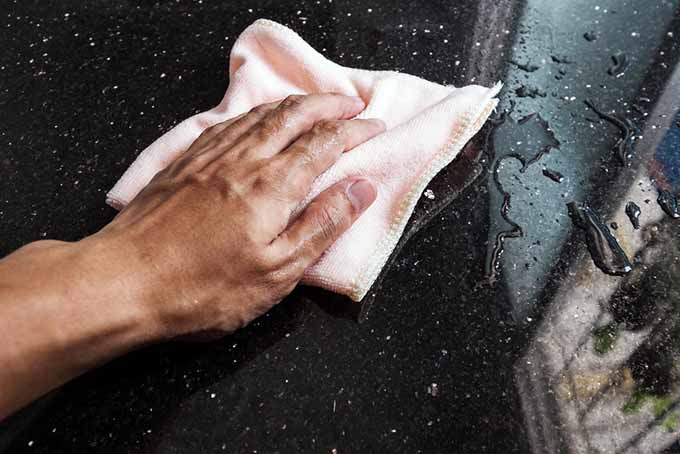
Tani waxay ku xiran tahay isticmaalka saxanka iyo deegaanka. Waxaan kugula talineynaa in saxan cusub ama qalab granite sax ah la siiyo dib-u-habeyn buuxda hal sano gudahood marka la iibsado. Haddii saxanka dusha sare ee granite uu arko isticmaal culus, waxaa lagugula talin karaa in muddadan la soo gaabiyo lix bilood. Kormeerka bishii ee khaladaadka cabbirka ee soo noqnoqda iyadoo la adeegsanayo heer Elektaroonik ah, ama qalab la mid ah ayaa muujin doona wixii dhibco xirasho ah oo soo koraya waxayna qaadataa dhowr daqiiqo oo keliya in la sameeyo. Ka dib marka natiijooyinka dib-u-habaynta ugu horreysa la go'aamiyo, muddada cabbiraadda ayaa la kordhin karaa ama la gaabin karaa sida uu u oggol yahay ama u baahan yahay nidaamkaaga tayada gudaha.
Waxaan ku siin karnaa adeeg kaa caawinaya inaad baarto oo aad hagaajiso saxankaaga dusha sare ee granite.

Waxaa jira sababo kala duwan oo keeni kara kala duwanaanshaha u dhexeeya calibrations-ka:
- Dusha sare waxaa lagu dhaqay xal kulul ama qabow ka hor inta aan la hagaajin, mana loo oggolaan waqti ku filan oo lagu caadiyeeyo.
- Saxanka si khaldan ayaa loo taageeraa
- Isbeddelka heerkulka
- Qabyo-qoraalka
- Qorraxda tooska ah ama kulayl kale oo shucaac leh oo saaran dusha sare ee saxanka. Hubi in nalalka korkiisa aysan kululayn dusha sare.
- Kala duwanaanshaha heerkulka toosan ee u dhexeeya jiilaalka iyo xagaaga (Haddii ay suurtogal tahay, ogow heerkulka jihada toosan wakhtiga la samaynayo hagaajinta.)
- Saxanka looma oggola waqti ku filan oo uu caadi ku noqdo ka dib marka la raro
- Isticmaalka aan habboonayn ee qalabka kormeerka ama isticmaalka qalabka aan la cabbirin
- Isbeddelka dusha sare ee ka dhasha xirashada
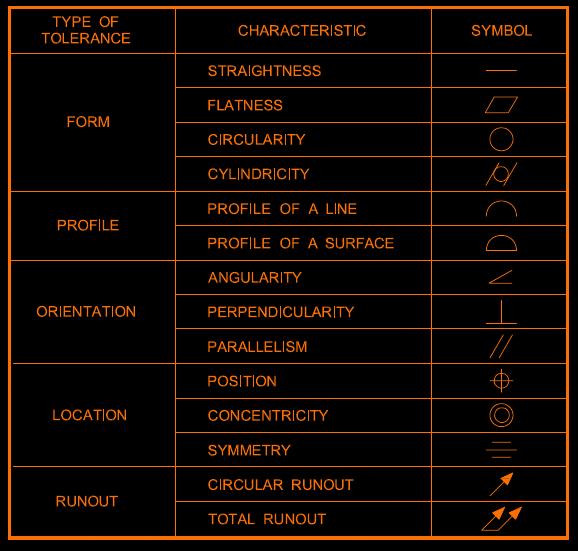
Immisa nooc oo godad ah oo ku yaal granite sax ah?
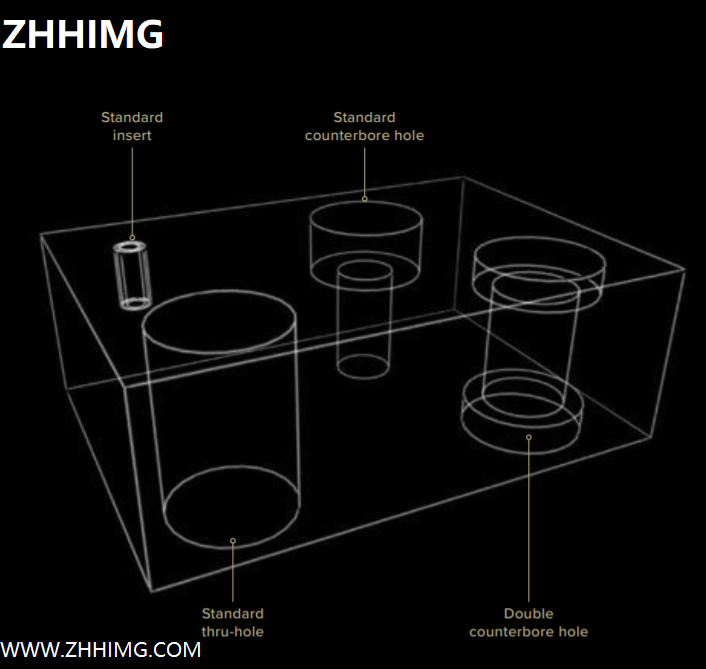
Meelaha lagu dhejiyo qaybaha Granite-ka Sax ah
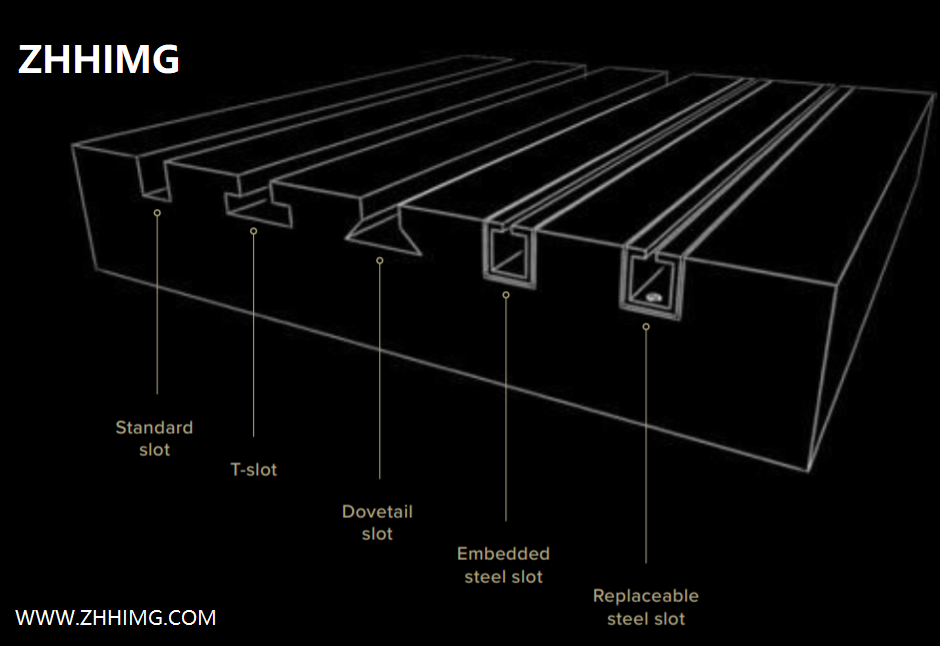
Warshad badan, qolalka kormeerka iyo shaybaarrada, saxamada dusha sare ee granite-ka ayaa lagu tiirsan yahay inay saldhig u yihiin cabbiraadda saxda ah. Sababtoo ah cabbir kasta oo toosan waxay ku xiran tahay dusha tixraaca saxda ah ee laga qaado cabbirrada kama dambaysta ah, saxamada dusha sare waxay bixiyaan meesha ugu fiican ee tixraaca shaqada iyo qaabaynta ka hor inta aan la farsamayn. Waxay sidoo kale yihiin saldhigyo ku habboon sameynta cabbirrada dhererka iyo dusha sare ee qiimaynta. Intaa waxaa dheer, heer sare oo fidsanaan ah, xasillooni, tayo guud iyo shaqo-gacmeed ayaa ka dhigaya xulasho wanaagsan oo lagu rakibayo nidaamyada qiimaynta farsamada casriga ah, elektaroonigga iyo indhaha. Mid kasta oo ka mid ah hababka cabbiraadda, waa lama huraan in saxamada dusha sare la hagaajiyo.
Ku celi Cabbiraadaha iyo Fidsanaanta
Cabbiraadaha siman iyo kuwa ku celcelinta labaduba waa muhiim si loo hubiyo dusha sare ee saxda ah. Fidsanaan waxaa loo tixgelin karaa inay yihiin dhammaan qodobbada dusha sare ku yaal oo ku jira laba diyaaradood oo is barbar socda, diyaaradda salka iyo diyaaradda saqafka. Cabbiraadaha masaafada u dhaxaysa diyaaradaha waa fidsanaan guud ee dusha sare. Cabbiraadahan fidsanaantu waxay caadi ahaan wataan dulqaad waxayna ku jiri karaan calaamadayn darajo.
Dulqaadka fidsan ee saddex darajo oo caadi ah ayaa lagu qeexay qeexitaanka federaalka sida lagu go'aamiyay qaacidada soo socota:
Heerka DIN, Heerka GB, Heerka ASME, Heerka JJS... waddan kala duwan oo leh mowqif kala duwan...
Faahfaahin dheeraad ah oo ku saabsan heerka.
Marka laga soo tago fidsanaan, waa in la hubiyaa ku celcelinta. Cabbiraadda ku celcelinta waa cabbiraadda meelaha fidsan ee maxalliga ah. Waa cabbir laga qaaday meel kasta oo dusha sare ee saxan ah oo ku celin doonta dulqaadka la sheegay. Xakamaynta fidsanaan aagga maxalliga ah si loo helo dulqaad adag marka loo eego fidsanaan guud waxay dammaanad qaadaysaa isbeddel tartiib tartiib ah oo ku yimaada muuqaalka fidsanaan ee dusha sare, taasoo yaraynaysa khaladaadka maxalliga ah.
Si loo hubiyo in saxanka dusha sare uu buuxiyo shuruudaha cabbirka siman iyo kuwa soo noqnoqda, soosaarayaasha saxanka dusha sare ee granite waa inay isticmaalaan Tilmaamaha Federaalka GGG-P-463c oo saldhig u ah qeexitaankooda. Heerkani wuxuu wax ka qabanayaa saxnaanta cabbirka soo noqnoqda, sifooyinka walxaha ee granite-ka dusha sare, dhammaystirka dusha sare, goobta taageerada, adkaanta, hababka la aqbali karo ee kormeerka iyo rakibidda gelinta dunta leh.
Hubinta Saxnaanta Saxanka
Marka la raaco dhowr tilmaamood oo fudud, maalgashiga saxanka dusha sare ee granite waa inuu socdaa sannado badan. Iyada oo ku xidhan isticmaalka saxanka, deegaanka dukaanka iyo saxnaanta loo baahan yahay, inta jeer ee la hubinayo saxnaanta saxanka dusha sare way kala duwan tahay. Xeerka guud ee suulka ayaa ah in saxan cusub uu helo dib-u-habayn buuxda hal sano gudahood marka la iibsado. Haddii saxanka si joogto ah loo isticmaalo, waxaa lagugula talinayaa in muddadan loo soo gaabiyo lix bilood.
Kahor inta saxanka dusha sare uusan duugoobin si ka baxsan qeexitaanka guud ee fidsanaantiisa, wuxuu muujin doonaa tiirar duugoobay ama ruxmaya. Kormeerka bishii ee khaladaadka cabbirka ee soo noqnoqda iyadoo la adeegsanayo cabbir akhrin oo ku celcelin ah ayaa aqoonsan doona meelaha xirashada. Cabbirka akhrinta ee ku celcelinta ah waa qalab sax ah oo sareeya kaas oo ogaanaya khaladaadka maxalliga ah waxaana lagu soo bandhigi karaa cod-weyneeye elektaroonig ah oo weyneynaya oo sare.
Barnaamij kormeer oo wax ku ool ah waa inuu ku jiraa hubin joogto ah oo leh qalab otomaatig ah, kaasoo bixiya habayn dhab ah oo siman oo lagu raadraaci karo Machadka Heerarka iyo Tiknoolajiyadda Qaranka (NIST). Habayn dhammaystiran oo uu sameeyo soo saaraha ama shirkad madax-bannaan ayaa lagama maarmaan ah mar mar.
Kala duwanaanshaha u dhexeeya Kala-hagaajinta
Xaaladaha qaarkood, waxaa jira kala duwanaansho u dhexeeya cabbiraadda saxanka dusha sare. Mararka qaarkood arrimo ay ka mid yihiin isbeddelka dusha sare ee ka dhasha xirashada, isticmaalka khaldan ee qalabka kormeerka ama isticmaalka qalabka aan la hagaajin ayaa mas'uul ka noqon kara kala duwanaanshahan. Si kastaba ha ahaatee, labada arrimood ee ugu badan waa heerkulka iyo taageerada.
Mid ka mid ah doorsoomayaasha ugu muhiimsan waa heerkulka. Tusaale ahaan, dusha sare waxaa laga yaabaa in lagu dhaqay xal kulul ama qabow ka hor inta aan la hagaajin oo aan loo oggolaan waqti ku filan oo lagu caadiyeeyo. Sababaha kale ee isbeddelka heerkulka waxaa ka mid ah qabsashada hawada qabow ama kulul, iftiinka qorraxda tooska ah, iftiinka sare ama ilo kale oo kuleyl shucaac ah oo saaran dusha sare ee saxanka.
Waxaa sidoo kale jiri kara kala duwanaansho heerkulka toosan ee u dhexeeya jiilaalka iyo xagaaga. Xaaladaha qaarkood, saxanka looma ogola waqti ku filan oo uu caadi ku noqdo ka dib marka la raro. Waa fikrad wanaagsan in la duubo heerkulka jihada toosan wakhtiga la sameeyay.
Sabab kale oo caadi ah oo keenta kala duwanaanshaha cabbiraadda waa saxan aan si habboon loo taageerin. Saxanka dusha sare waa in lagu taageeraa saddex meelood, oo si fiican loogu meeleeyay 20% dhererka laga bilaabo dhammaadka saxanka. Laba taageero waa inay ku yaalliin 20% ballaca dhinacyada dheer, taageerada soo hartayna waa inay ku taallaa bartamaha.
Saddex dhibcood oo keliya ayaa si adag ugu dul fadhiisan kara wax kasta marka laga reebo dusha sare ee saxda ah. Isku dayga lagu taageerayo saxanka in ka badan saddex dhibcood waxay sababi doontaa in saxanka uu taageero ka helo isku-darka kala duwan ee saddex dhibcood, kuwaas oo aan noqon doonin saddexdii dhibcood ee lagu taageeray intii lagu jiray wax soo saarka. Tani waxay keeni doontaa khaladaad marka saxanka uu leexdo si uu ula jaanqaado qaab-dhismeedka taageerada cusub. Ka fiirso inaad isticmaasho saldhigyada birta ah oo leh alwaaxyo taageero ah oo loogu talagalay inay la jaanqaadaan meelaha taageerada saxda ah. Istaraatiijiyadaha ujeeddadaas guud ahaan waxaa laga heli karaa soo saaraha saxanka dusha sare.
Haddii saxanka si sax ah loo taageero, sixitaanka saxda ah ayaa loo baahan yahay oo keliya haddii codsigu qeexayo. Sixitaanka looma baahna si loo ilaaliyo saxnaanta saxanka si habboon loo taageeray.
Kordhi cimriga saxanka
Raacitaanka dhowr tilmaamood ayaa yareyn doona xirashada saxanka dusha sare ee granite, ugu dambayntiina, waxay kordhin doontaa cimrigeeda.
Marka hore, waa muhiim in saxanka la nadiifiyo. Boorka hawada laga xoqo ayaa badanaa ah isha ugu weyn ee ka dhalata xoqidda iyo jeexjeexa saxanka, maadaama uu u janjeero inuu ku dhex milmo qaybaha shaqada iyo meelaha taabashada ee cabbirrada.
Sidoo kale waa muhiim in la daboolo saxannada si looga ilaaliyo boodhka iyo dhaawaca. Cimriga xirashada waxaa lagu dheereyn karaa iyadoo la daboolayo saxanka marka aan la isticmaalin.
Si joogto ah u wareeji saxanka si meel keliya aysan u helin isticmaal xad dhaaf ah. Sidoo kale, waxaa lagu talinayaa in suufka birta ah ee taabashada lagu beddelo suufka carbide-ka.
Iska ilaali inaad cunto ama cabitaanno fudud saarto saxanka. Cabitaanno badan oo jilicsan ayaa ka kooban aashitada kaarboon ama fosfoorik, taasoo milmi karta macdanta jilicsan oo ka tagi karta godad yaryar oo dusha sare ah.
Xaggee lagu celin karaa
Marka saxanka dusha sare ee granite uu u baahan yahay dib-u-samayn, tixgeli in adeeggan lagu sameeyo goobta ama xarunta cabbiraadda. Had iyo jeer waa la doorbidaa in saxanka lagu celiyo warshadda ama xarun gaar ah. Si kastaba ha ahaatee, haddii saxanka uusan si xun u duugoobin, guud ahaan 0.001 inji oo ka mid ah dulqaadka loo baahan yahay, waxaa dib loogu soo celin karaa goobta. Haddii saxanka la xidho ilaa uu ka badan yahay 0.001 inji oo aan dulqaad lahayn, ama haddii si xun loo dalooliyay ama loo jaray, markaa waa in loo diraa warshadda si loogu shiido ka hor inta aan dib loo soo celin.
Xarunta cabbiraadda waxay leedahay qalabka iyo dejinta warshadda oo bixisa xaaladaha ugu habboon ee saxnaanta saxanka iyo dib-u-habaynta haddii loo baahdo.
Waa in si weyn looga taxaddaraa doorashada farsamo yaqaan goobta ku takhasusay hagaajinta iyo dib-u-hagaajinta. Weydiiso aqoonsi oo hubi in qalabka uu farsamayaqaanku isticmaali doono uu leeyahay cabbir la raadraaci karo. Waayo-aragnimadu sidoo kale waa arrin muhiim ah, maadaama ay qaadato sannado badan in la barto sida saxda ah ee loo sameeyo granite-ka saxda ah.
Cabbiraadaha muhiimka ah waxay ka bilaabmaan saxanka dusha sare ee granite oo ah saldhig. Iyagoo hubinaya tixraac lagu kalsoonaan karo iyagoo isticmaalaya saxan dusha sare oo si habboon loo hagaajiyay, soosaarayaashu waxay leeyihiin mid ka mid ah qalabka lagama maarmaanka u ah cabbiraadda la isku halleyn karo iyo qaybo tayo wanaagsan leh.Q
Liiska Hubinta Kala Duwanaanta Kala-duwanaanshaha
1. Dusha sare waxaa lagu dhaqay xal kulul ama qabow ka hor inta aan la hagaajin, mana loo oggolaan waqti ku filan oo lagu caadiyeeyo.
2. Saxanka si khaldan ayaa loo taageeraa.
3. Isbeddelka heerkulka.
4. Qabyo-qoraal.
5. Qorraxda tooska ah ama kulayl kale oo shucaac leh oo saaran dusha sare ee saxanka. Hubi in nalalka kor ku xusan aysan kululayn dusha sare.
6. Kala duwanaanshaha heerkulka toosan ee u dhexeeya jiilaalka iyo xagaaga. Haddii ay suurtogal tahay, ogow heerkulka jihada toosan ee waqtiga la sameynayo.
7. Saxanka looma oggolaan waqti ku filan oo uu caadi ku noqdo ka dib marka la raro.
8. Isticmaalka aan habboonayn ee qalabka kormeerka ama isticmaalka qalabka aan la hagaajin.
9. Isbeddelka dusha sare ee ka dhasha xirashada.
Talooyinka Tiknoolajiyada
- Sababtoo ah cabbir kasta oo toosan wuxuu ku xiran yahay dusha saxda ah ee tixraaca laga qaado cabbirrada kama dambaysta ah, taarikada dusha sare waxay bixiyaan meesha ugu fiican ee loogu talagalay kormeerka shaqada iyo qaabaynta ka hor inta aan la farsamayn.
- Xakamaynta fidsanaanta aagga maxalliga ah si loo helo dulqaad adag marka loo eego fidsanaanta guud waxay dammaanad qaadaysaa isbeddel tartiib tartiib ah oo ku yimaada muuqaalka fidsanaanta dusha sare, taasoo yaraynaysa khaladaadka maxalliga ah.
- Barnaamij kormeer oo wax ku ool ah waa inuu ku jiraa hubin joogto ah oo leh qalab is-xakameeya otomaatiga, kaas oo siinaya habayn dhab ah oo lagu ogaan karo fidsanaanta guud ee Hay'adda Kormeerka Qaranka.
Walxaha macdanta ee sameeya granite-ka, in ka badan 90% waa feldspar iyo quartz, kuwaas oo feldspar uu ugu badan yahay. Feldspar-ku badanaa waa caddaan, cawl, iyo casaan hilib ah, quartz-kuna badanaa waa caddaan aan midab lahayn ama cawl lahayn, kuwaas oo ah midabka aasaasiga ah ee granite-ka. Feldspar iyo quartz waa macdanno adag, wayna adag tahay in lagu dhaqaaqo mindi bir ah. Marka laga hadlayo meelaha mugdiga ah ee granite-ka, inta badan mica madow, waxaa jira macdano kale. Inkasta oo biotite uu yahay mid jilicsan, haddana awooddiisa uu u leeyahay inuu iska caabiyo walbahaarka ma aha mid daciif ah, isla markaana waxay leeyihiin xaddi yar oo granite ah, inta badan wax ka yar 10%. Tani waa xaaladda maaddada ee granite-ku si gaar ah ugu xooggan yahay.
Sabab kale oo granite-ku u xooggan yahay ayaa ah in walxaha macdanta ku jira ay si adag isugu xiran yihiin oo ay isku dhex jiraan. Dalooladu waxay inta badan ka yar yihiin 1% mugga guud ee dhagaxa. Tani waxay siinaysaa granite-ka awoodda uu u adkeysan karo cadaadisyada xooggan mana si fudud u geli karo qoyaanka.
Qaybaha Granite-ka waxaa laga sameeyay dhagax aan lahayn miridh, iska caabin aashito iyo alkali ah, iska caabin wanaagsan oo xirasho iyo cimri dheer, dayactir gaar ah ma laha. Qaybaha saxnaanta Granite-ka waxaa inta badan loo isticmaalaa qalabka warshadaha mishiinada. Sidaa darteed, waxaa loogu yeeraa qaybaha saxnaanta granite-ka ama qaybaha granite-ka. Astaamaha qaybaha saxnaanta granite-ka waxay asal ahaan la mid yihiin kuwa goobaha granite-ka. Hordhac ku saabsan qalabka iyo cabbiraadda qaybaha saxnaanta granite-ka: Mashiinka saxda ah iyo tiknoolajiyada mishiinada yar yar waa tilmaamo horumarineed oo muhiim ah oo warshadaha wax soo saarka mishiinada ah, waxayna noqdeen tilmaame muhiim ah oo lagu cabbiro heer tiknoolajiyad sare ah. Horumarinta tignoolajiyada casriga ah iyo warshadaha difaaca waa mid aan laga sooci karin mishiinada saxda ah iyo tignoolajiyada mishiinada yar yar. Qaybaha Granite-ka si habsami leh ayaa loogu simbiriirixi karaa cabbirka, iyada oo aan la fadhiisan. Cabbirka dusha sare ee shaqada, xoqidda guud ma saameeyaan saxnaanta cabbirka. Qaybaha Granite-ka waa in loo qaabeeyaa oo la soo saaraa iyadoo loo eegayo shuruudaha dhinaca baahida.
Goobta Codsiga:
Sida aan wada ognahay, mashiinno iyo qalab badan ayaa dooranaya qaybaha saxda ah ee granite.
Qaybaha Granite waxaa loo isticmaalaa dhaqdhaqaaqa firfircoon, matoorada toosan, cmm, cnc, mashiinka laysarka...
kusoo dhawoow inaad nala soo xiriirto si aad u hesho macluumaad dheeraad ah.
Qalabka cabbiraadda granite-ka iyo qaybaha farsamada granite-ka waxaa laga sameeyay dhagax madow oo tayo sare leh oo Jinan ah. Sababtoo ah saxnaantooda sare, muddada dheer, xasilloonida wanaagsan iyo iska caabbinta daxalka, waxaa si aad ah loogu isticmaalay kormeerka badeecadaha warshadaha casriga ah iyo meelaha sayniska sida hawada farsamada iyo cilmi-baarista sayniska.
Faa'iidooyinka
----Laba jibaar adag sida birta la shubay;
---- Isbeddellada ugu yar ee cabbirka waxaa sabab u ah isbeddellada heerkulka;
-----Ka xor ah xoqidda, sidaa darteed ma jirto joojin shaqada ah!
-----Ka xor ah burrs ama soo bax sababtoo ah qaab-dhismeedka hadhuudhka khafiifka ah iyo dhegdheg aan muhiim ahayn, taas oo hubinaysa heerka sare ee fidsanaanta muddada dheer ee adeegga oo aan waxyeello u geysanayn qaybaha kale ama qalabka;
---- Hawlgal aan dhib lahayn oo loogu talagalay isticmaalka walxaha birlabta ah;
----Cimri dheer iyo miridh la'aan, taasoo keentay kharash dayactir oo hooseeya.
Saxannada dusha sare ee granite-ka saxda ah waxaa si sax ah loogu dhejiyay heerka fidsan ee heerka sare ah si loo gaaro saxnaan waxaana loo isticmaalaa saldhig ahaan rakibidda nidaamyada cabbiraadda farsamada casriga ah, elektaroonigga ah iyo indhaha.
Qaar ka mid ah faa'iidooyinka gaarka ah ee saxanka dusha sare ee granite:
Midnimo ku jirta Adkaanta;
Xaaladaha raritaanka saxda ah;
Neefsashada Gariirka;
Si Fudud Loo Nadiifin Karo;
Duub u adkaysta;
Fosfooraska Hoose;
Aan xoqin;
Aan Magnetik ahayn
Faa'iidooyinka Saxanka Dusha Sare ee Granite
Marka hore, dhagaxa ka dib muddo dheer oo gabowga dabiiciga ah, qaab-dhismeed isku mid ah, ugu yaraan isku-dhafka, cadaadiska gudaha ayaa gebi ahaanba baaba'aya, ma aha mid isbeddelaya, sidaa darteed saxnaanta ayaa sareysa.
Marka labaad, ma jiri doonto xoqid, ma jiri doonto xaalado heerkul joogto ah, heerkulka qolka ayaa sidoo kale ilaalin kara saxnaanta cabbirka heerkulka.
Saddexaad, ma aha birlabeynta, cabbirku wuxuu noqon karaa dhaqdhaqaaq siman, dareen qaylo leh ma jiro, qoyaanku saameyn kuma yeelanayo, diyaaradda waa la hagaajiyay.
Afar, adkaanshuhu waa wanaagsan yahay, adkaanshuhu waa sarreeyaa, iska caabbinta xoqidda waa xooggan tahay.
Shan, oo aan ka baqayn nabaad-guurka aashitada, dareeraha alkaline-ka ah, ma miridhku doono, uma baahna in saliid lagu rinjiyeeyo, ma fududa in la dhego boodhka yar yar, dayactir, si fudud loo dayactiro, cimri dheerna waa la heli karaa.
Maxaad u dooran lahayd saldhig granite ah halkii aad ka dooran lahayd sariirta mashiinka birta ah?
1. Saldhigga mashiinka granite wuxuu ilaalin karaa saxnaan ka sarreysa saldhigga mashiinka birta la shubay. Saldhigga mashiinka birta la shubay si fudud ayuu u saameeyaa heerkulka iyo qoyaanka laakiin saldhigga mashiinka granite ma saameyn doono;
2. Iyada oo leh cabbir isku mid ah oo ah saldhigga mashiinka granite iyo saldhigga birta la shubay, saldhigga mashiinka granite-ka ayaa ka kharash badan birta la shubay;
3. Saldhigga mashiinka granite-ka gaarka ah ayaa ka fudud in la dhammeeyo marka loo eego saldhigga mashiinka birta la shubay.
Taarikada dusha sare ee granite waa qalab muhiim ah oo ku jira shaybaarrada kormeerka ee dalka oo dhan. Dusha sare ee la hagaajiyay oo aad u fidsan ee saxanka dusha sare waxay u saamaxaysaa kormeerayaasha inay u isticmaalaan saldhig ahaan kormeerka qaybaha iyo hagaajinta qalabka. Haddii aan lahayn xasilloonida ay bixiyaan taarikada dusha sare, qaybo badan oo si adag loo dulqaadan karo oo ku jira qaybaha kala duwan ee tignoolajiyada iyo caafimaadka ayaa aad u adkaan lahaa, haddii aysan macquul ahayn, in si sax ah loo soo saaro. Dabcan, si loo isticmaalo baloog dusha sare ee granite si loo hagaajiyo loona baaro agabka iyo qalabka kale, saxnaanta granite lafteeda waa in la qiimeeyaa. Isticmaalayaashu waxay hagaajin karaan saxanka dusha sare ee granite si loo hubiyo saxnaantiisa.
Nadiifi saxanka dusha sare ee granite-ka ka hor inta aan la hagaajin. Ku shub xaddi yar oo nadiifiyaha saxanka dusha sare ah maro nadiif ah oo jilicsan oo tirtir dusha sare ee granite-ka. Isla markiiba nadiifiyaha ka qalaji saxanka dusha sare maro qalalan. Ha u oggolaan dareeraha nadiifinta inuu hawo ku qallalo.
Dhig cabbir cabbir oo ku celcelin ah bartamaha saxanka dusha sare ee granite-ka.
Si aan loo eegin cabbirka ku celcelinta dusha sare ee saxanka granite-ka.
Si tartiib ah u dhaqaaji cabbirka dusha sare ee granite-ka. Daawo tilmaamaha cabbirka oo duub meelaha ugu sarreeya ee kala duwanaanshaha dhererka markaad qalabka ku wareejinayso saxanka.
Isbarbardhig kala duwanaanshaha fidsanaanta dusha sare ee saxanka iyo dulqaadka saxankaaga dusha sare, kaas oo ku kala duwan cabbirka saxanka iyo heerka fidsanaanta granite-ka. La tasho qeexitaanka federaalka GGG-P-463c (fiiri Khayraadka) si aad u ogaato haddii saxankaagu uu buuxiyo shuruudaha fidsanaanta ee cabbirkiisa iyo heerka. Kala duwanaanshaha u dhexeeya barta ugu sarreysa ee saxanka iyo barta ugu hooseysa ee saxanka waa cabbirkeeda fidsanaanta.
Hubi in kala duwanaanshaha qoto dheer ee ugu weyn ee dusha sare ee saxanka uu ku dhaco qeexitaannada ku celcelinta ee saxanka cabbirkaas iyo heerkaas leh. La tasho qeexitaanka federaalka GGG-P-463c (fiiri Khayraadka) si aad u ogaato in saxankaagu uu buuxiyo shuruudaha ku celcelinta ee cabbirkiisa. Iska diid saxanka dusha sare haddii xitaa hal dhibic ay ku guuldareysato shuruudaha ku celcelinta.
Jooji isticmaalka saxanka dusha sare ee granite-ka oo aan buuxin shuruudaha federaalka. Saxanka u celi soo saaraha ama shirkadda dusha sare ee granite-ka si baloogga dib loogu nadiifiyo si uu u buuxiyo shuruudaha.
Talo
Samee cabbiraad rasmi ah ugu yaraan hal mar sannadkii, inkastoo taarikada dusha sare ee granite-ka ee la isticmaalo ay tahay in si joogto ah loo cabbiro.
Habaynta rasmiga ah ee la duubi karo ee jawiga wax soo saarka ama kormeerka waxaa badanaa sameeya hubinta tayada ama iibiyaha adeegyada cabbiraadda dibadda, inkastoo qof kastaa uu isticmaali karo cabbir cabbiraad ku celcelis ah si uu si aan rasmi ahayn u hubiyo saxanka dusha sare ka hor inta aan la isticmaalin.
Taariikhda Hore ee Saxannada Dusha Sare ee Granite
Kahor Dagaalkii Labaad ee Adduunka, Soo-saarayaashu waxay u isticmaali jireen Taarikada Dusha Sare ee Birta ah baaritaanka cabbirka qaybaha. Intii lagu jiray Dagaalkii Labaad ee Adduunka baahida loo qabo birta ayaa si weyn u korodhay, waxaana dhalaalay Taarikada Dusha Sare ee Birta badan. Waxaa loo baahday beddel, Granite-na waxay noqotay agabka la doortay sababtoo ah sifooyinka metrology-ga ee sarreeya.
Faa'iidooyin dhowr ah oo granite ka badan birta ayaa soo muuqday. Granite waa ka adag tahay, inkastoo ay ka jilicsan tahay oo ay u nugul tahay jajab. Waxaad ku wareegi kartaa Granite si aad u siman oo aad uga dhaqso badan birta. Granite sidoo kale waxay leedahay hantida la rabo ee ballaarinta kulaylka oo ka hooseysa birta. Intaa waxaa dheer, haddii saxan bir ah uu u baahan yahay dayactir, waxay ahayd in gacanta lagu xoqo farshaxanleyda kuwaas oo sidoo kale xirfadahooda ku dabaqay dib u dhiska qalabka mashiinka.
Dhinaca kale, qaar ka mid ah Taarikada Dusha Sare ee Birta ah ayaa weli la isticmaalaa maanta.
Sifooyinka METrological ee Taarikada Granite
Dhagaxa granite waa dhagax igneous ah oo ay sameeyeen qaraxyada foolkaanaha. Marka la barbardhigo, marmarku waa dhagax nuurad ah oo isbeddelay. Isticmaalka metrology-ga, dhagaxa granite-ka ee la doortay waa inuu buuxiyaa shuruudaha gaarka ah ee ku xusan Tilmaamaha Federaalka GGG-P-463c, laga bilaabo hadda oo loo yaqaan Fed Specs, iyo gaar ahaan, Qaybta 3.1 3.1 Noocyada Fed, granite waa inay noqotaa qaab jilicsan ilaa dhexdhexaad ah.
Granite waa walax adag, laakiin adkaanteedu way kala duwan tahay sababo dhowr ah awgood. Farsamayaqaan khibrad leh oo saxanka granite ah ayaa ku qiyaasi kara adkaantiisa midabkiisa taasoo ah tilmaan muujinaysa heerka quartz-kiisa. Adkaanshaha granite waa astaamo lagu qeexay qayb ahaan xaddiga quartz-ka iyo la'aanta mica. Granite-ka cas iyo casaanka ah ayaa u badan inay yihiin kuwa ugu adag, cawladu waa adkaysi dhexdhexaad ah, madowguna waa kuwa ugu jilicsan.
Modulus of Elasticity ee Young waxaa loo isticmaalaa in lagu muujiyo dabacsanaanta ama tilmaanta adkaanta dhagaxa. Granite-ka casaanka ah wuxuu celcelis ahaan u dhigmaa 3-5 dhibcood miisaanka, cawlan 5-7 dhibcood iyo madow 7-10 dhibcood. Tirada yar, granite-ku wuu sii adkaanayaa. Tirada weyn, granite-ku wuu jilicsan yahay oo wuu dabacsan yahay. Waa muhiim in la ogaado adkaanta Granite-ka marka la dooranayo dhumucda loo baahan yahay si loo helo darajooyin dulqaad iyo miisaanka qaybaha iyo cabbirrada la saaray.
Waagii hore markii ay jireen mashiino dhab ah, oo loo yaqaan buug-yaraha miiska trig-ka ee jeebabkooda shaadhka, granite madow waxaa loo tixgelin jiray "Kuwa ugu Fiican." Kuwa ugu Fiican waxaa lagu qeexaa nooca bixiya iska caabbinta ugu badan ee xirashada ama ka adag. Mid ka mid ah cilladaha ayaa ah in granite-ka adag ay u muuqdaan inay si fudud u jajabaan ama u dhacaan. Machadayaashu aad bay ugu qanacsanaayeen in granite madow uu yahay kan ugu fiican oo qaar ka mid ah soosaarayaasha granite-ka casaanka ah ay ku midabeeyaan madow.
Aniga shaqsi ahaan waxaan arkay saxan laga soo tuuray fargeeto markii laga soo raray kaydinta. Saxanku wuxuu ku dhacay dabaqa oo laba u kala jabay isagoo muujinaya midabka dhabta ah ee casaanka ah. Taxaddar yeelo haddii aad qorsheyneyso inaad ka iibsato granite madow Shiinaha. Waxaan kugula talineynaa inaad lacagtaada ku lumiso si kale. Saxanka granite-ka wuu ku kala duwanaan karaa adkaantiisa. Taxanaha quartz-ka wuxuu aad uga adkaan karaa inta kale ee saxanka dusha sare. Lakab gabbro madow ah ayaa ka dhigi kara aagga mid aad u jilicsan. Farsamo yaqaanno si fiican u tababaran oo khibrad leh ayaa yaqaan sida loo maareeyo meelahan jilicsan.
Darajooyinka Saxanka Dusha Sare
Waxaa jira afar darajo oo ah saxannada dusha sare. Darajada shaybaarka AA iyo A, Darajada Kormeerka Qolka B, iyo Darajada afraad waa Darajada Aqoon-is-weydaarsiga. Darajada AA iyo A waa kuwa ugu fidsan uguna dulqaadka fidsan ee ka wanaagsan 0.00001 inji saxanka AA ee Darajada. Darajooyinka Aqoon-is-weydaarsiga waa kuwa ugu fidsan uguna yar sida magacu tilmaamayo, waxaa loogu talagalay in lagu isticmaalo qolalka qalabka. Halka Darajada AA, Darajada A iyo Darajada B loogu talagalay in lagu isticmaalo shaybaarka kormeerka ama xakamaynta tayada.
PTijaabinta Roper ee loogu talagalay Kala-hagaajinta Saxanka Dusha sare
Mar walba waxaan macaamiishayda u sheegi jiray inaan ka soo saari karo kaniisaddayda ilmo kasta oo 10 jir ah oo aan bari karo dhowr maalmood gudahood sida loo tijaabiyo saxanka. Ma aha mid adag. Waxay u baahan tahay farsamo si loo qabto hawsha si dhakhso ah, farsamooyin qofku ku barto waqti iyo ku celcelin badan. Waa inaan kuu sheegaa, mana ku filnaan karo inaan xoogga saaro, Fed Spec GGG-P-463c MAAHA hab lagu cabbiro! Wixii dheeraad ah ee ku saabsan taas dambe.
Hubinta guud ee siman (Mean Pane) iyo ku celcelinta (xirashada maxalliga ah) waa lama huraan Sida ku xusan Tilmaamaha Fed. Waxa kaliya ee ka reeban tan waa saxanno yaryar oo ku celcelinta loo baahan yahay oo keliya.
Sidoo kale, oo sidoo kale muhiim u ah sida tijaabooyinka kale, waa tijaabada kala-duwanaanshaha kulaylka. (Eeg Delta T ee hoose)
Jaantuska 1aad
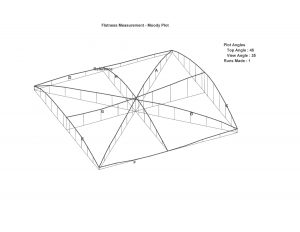
Tijaabada Fidsanaantu waxay leedahay 4 hab oo la ansixiyay. Heerarka elektaroonigga ah, is-ururinta otomaatiga ah, laysarka iyo qalab loo yaqaan goob diyaaradeed. Waxaan isticmaalnaa oo keliya heerarka elektaroonigga ah sababtoo ah waa habka ugu saxsan uguna dhaqsaha badan dhowr sababood awgood.
Laysaradaha iyo kuwa otomaatiga ah waxay u isticmaalaan iftiin aad u toosan tixraac ahaan. Qofku wuxuu sameeyaa cabbir toosan oo saxanka dusha sare ee granite ah isagoo isbarbardhigaya kala duwanaanshaha masaafada u dhaxaysa saxanka dusha sare iyo iftiinka iftiinka. Adigoo qaadanaya iftiin toosan, kuna dhejinaya bartilmaameedka iftiinka iyadoo la dhaqaajinayo bartilmaameedka iftiinka hoos saxanka dusha sare, masaafada u dhaxaysa iftiinka la sii daayay iyo iftiinka soo laabtay waa cabbir toosan.
Waa kan dhibaatada habkan. Bartilmaameedka iyo isha waxaa saameeya gariirka, heerkulka deegaanka, bartilmaameed ka yar siman ama xoqan, wasakhowga hawada, iyo dhaqdhaqaaqa hawada (currents). Dhammaan kuwan waxay gacan ka geystaan qaybo dheeraad ah oo khalad ah. Intaa waxaa dheer, ka qayb qaadashada qaladka hawlwadeenka ee ka yimaada hubinta otomaatiga ah ayaa ka weyn.
Isticmaalaha khibradda leh ee otomaatiga ah wuxuu sameyn karaa cabbiro aad u sax ah laakiin wali wuxuu wajahayaa dhibaatooyin la xiriira isku dheelitirka akhrinta gaar ahaan masaafada dheer maadaama milicsigu uu u muuqdo inuu ballaaranayo ama uu yara mugdiga noqonayo. Sidoo kale, bartilmaameed aan si fiican u simanayn iyo maalin dheer oo lagu fiirinayo muraayadda ayaa keena khaladaad dheeraad ah.
Qalabka raadraaca diyaaradda waa wax aan macquul ahayn. Qalabkani wuxuu adeegsadaa tilmaame toosan (marka la barbar dhigo iftiin aad u toosan oo isku xiran ama iftiin laysar ah) oo ah tixraaciisa. Qalabka farsamada ma aha oo kaliya inuu isticmaalo tilmaame leh xallinta 20 u Inch oo keliya, laakiin sidoo kale aan toosnayn ee usha iyo agabka kala duwan ayaa si weyn ugu dara khaladaadka cabbirka. Fikraddayada, inkastoo habkani yahay mid la aqbali karo, ma jiro shaybaar karti leh oo waligiis u isticmaali doona qalabka raadinta diyaaradda sidii qalab kormeer oo kama dambays ah.
Heerarka elektaroonigga ah waxay u adeegsadaan cufisjiidadka inay tixraac u noqdaan. Heerarka elektaroonigga ah ee kala duwan saameyn kuma yeeshaan gariirka. Waxay leeyihiin xallin hoose oo ah .1 ilbiriqsi cabbirkooduna waa dhakhso, sax, waxaana jira wax yar oo ka mid ah khaladaadka ka yimaada hawlwadeen khibrad leh. Ma jiraan Plane Locators ama autocollimators oo bixiya qaab-dhismeedka kombiyuutarku sameeyay (Jaantuska 1) ama jaantusyada isometric (Jaantuska 2) ee dusha sare.
Jaantuska 2aad
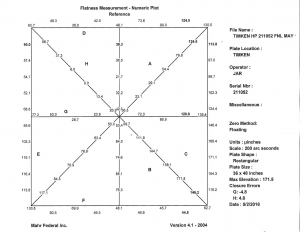
Tijaabada Dusha Sare ee Fidsanaan Habboon
Fidsanaanta saxda ah ee tijaabada dusha sare waa qayb muhiim ah oo ka mid ah warqaddan, waana inaan marka hore dhigo. Sida hore loo sheegay, Fed Spec. GGG-p-463c MAAHA hab cabbir ah. Waxay u adeegtaa hage dhinacyo badan oo granite ah oo heerka mitirka ah oo iibsadaha loogu talagalay uu yahay Hay'ad kasta oo Dowladda Federaalka ah, taas oo ay ku jiraan hababka tijaabinta iyo dulqaadka ama darajooyinka. Haddii qandaraasle uu sheegto inuu u hoggaansamay Fed Specs, markaa qiimaha fidsanaanta waxaa go'aamin doona Moody Method.
Moody wuxuu ahaa nin laga soo bilaabo 50-meeyadii kaasoo sameeyay hab xisaabeed si loo go'aamiyo fidsanaanta guud iyo in la tixgeliyo jihada xariiqyada la tijaabiyay, inay si ku filan isugu dhow yihiin isla hal meel. Waxba isma beddelin. Allied Signal waxay isku dayday inay horumariso habka xisaabta laakiin waxay ku soo gabagabeysay in kala duwanaanshuhu aad u yar yahay oo aysan u qalmin dadaalka.
Haddii qandaraasle saxanka dusha sare uu isticmaalo Heerarka Elektarooniga ah ama laysarka, wuxuu isticmaalaa kombiyuutar si uu uga caawiyo xisaabinta. Iyada oo aan la isticmaalin kombiyuutar, farsamayaqaanka isticmaalaya autocollimation waa inuu gacanta ku xisaabiyaa akhrinta. Dhab ahaantii, ma sameeyaan. Waxay qaadataa waqti aad u dheer oo si daacadnimo ah waxay noqon kartaa mid aad u adag. Imtixaanka fidsan ee isticmaalaya Habka Moody, farsamayaqaanku wuxuu tijaabiyaa siddeed sadar oo ku jira qaabaynta Union Jack si loo helo toosan.
Habka Moody
Habka Moody waa hab xisaabeed oo lagu go'aamiyo in siddeedda xariiq ay ku jiraan isla diyaaradda. Haddii kale, waxaad haysataa 8 xariiq oo toosan oo laga yaabo inay ku jiraan ama aysan ku jirin ama u dhowayn isla diyaaradda. Intaa waxaa dheer, qandaraasle sheeganaya inuu u hoggaansamayo Fed Spec, oo adeegsanaya is-waafajinta otomaatiga ah, isaguwaa insoo saar siddeed bog oo xog ah. Hal bog oo sadar kasta ah ayaa la hubiyay si loo caddeeyo tijaabintiisa, hagaajintiisa, ama labadaba. Haddii kale, qandaraasluhu ma haysto fikrad ah waxa qiimaha dhabta ah ee fidsan yahay.
Waxaan hubaa haddii aad tahay mid ka mid ah kuwa qandaraasle uu saxaradahaaga ku hagaajiyo isagoo adeegsanaya autocollimation, weligaa ma arag bogaggaas! Jaantuska 3 waa tusaale ka mid ahhal kaliyaBogga sideedaad ee lagama maarmaanka u ah xisaabinta simanaanta guud. Hal tilmaam oo muujinaya jaahilnimadaas iyo xumaantaas ayaa ah haddii warbixintaadu ay leedahay tirooyin wareegsan oo wanaagsan. Tusaale ahaan, 200, 400, 650, iwm. Qiimo si habboon loo xisaabiyay waa tiro dhab ah. Tusaale ahaan 325.4 u In. Marka qandaraasluhu isticmaalo Habka xisaabinta Moody, farsamayaqaankuna uu si gacan ah u xisaabiyo qiimayaasha, waa inaad heshaa siddeed bog oo xisaabin ah iyo sawir isometric ah. Sawirka isometric wuxuu muujinayaa dhererka kala duwan ee ku yaal khadadka kala duwan iyo inta masaafada u dhaxaysa meelaha isgoysyada la doortay.
Jaantuska 3aad(Waxay qaadataa siddeed bog oo sidan oo kale ah in gacanta lagu xisaabiyo fidsanaan. Hubi inaad weydiiso sababta aadan tan u heli doonin haddii qandaraaslahaagu uu isticmaalo is-collimation!)
Jaantuska 4aad
Farsamoyaqaannada Cabbirka Cabbirka waxay adeegsadaan heerar kala duwan (Jaantuska 4) iyagoo ah aalado la door bidayo si ay u cabbiraan isbeddellada daqiiqadaha ah ee xagasha laga bilaabo saldhigga cabbirka ilaa saldhigga. Heerarku waxay leeyihiin xallin ilaa .1 ilbiriqsi oo qaanso ah (5 u inji oo isticmaalaya 4 inji oo loox ah) aad bay u deggan yihiin, ma saameeyaan gariirka, masaafada la cabbiray, qulqulka hawada, daalka hawlwadeenka, wasakhowga hawada ama dhibaatooyinka ku jira aaladaha kale. Ku dar caawinta kombiyuutarka, shaqaduna waxay noqotaa mid aad u dhakhso badan, taasoo soo saarta sawirro dhuleed iyo isometric ah oo caddaynaya xaqiijinta iyo tan ugu muhiimsan dayactirka.
Tijaabo Ku Celcelis Ah Oo Haboon
Akhrinta ku celcelinta ama ku celcelinta ayaa ah tijaabada ugu muhiimsan. Qalabka aan u isticmaalno si aan u sameyno tijaabada ku celcelinta waa qalab akhrin oo ku celcelin ah, LVDT iyo amplifier lagama maarmaan u ah akhrinta xallinta sare. Waxaan u dejineynaa amplifier-ka LVDT xallinta ugu yar ee 10 u Inches ama 5 u Inches si loo helo saxnaan sare.
Isticmaalka tilmaame farsamo oo leh xallinta 20 u Inches oo keliya waa wax aan qiimo lahayn haddii aad isku dayeyso inaad tijaabiso shuruud ku celcelin ah oo ah 35 u Inches. Tilmaamayaashu waxay leeyihiin hubanti la'aan 40 u Inches ah! Dejinta akhrinta ku celcelinta waxay la mid tahay qaabaynta dhererka/qaybta.
Ku celcelintu MAAHA mid la mid ah fidsanaanta guud (Diyaar Dhexdhexaad ah). Waxaan jeclahay inaan ka fikiro ku celcelinta granite-ka oo loo arko cabbir radius oo joogto ah.
Jaantuska 5aad
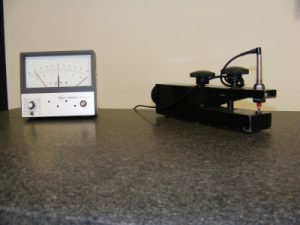
Haddii aad tijaabiso ku celcelinta kubbadda wareegsan, markaa waxaad muujisay in wareegga kubbadda uusan isbeddelin. (Astaanta ugu habboon ee saxanka si habboon loo hagaajiyay wuxuu leeyahay qaab laalaaban.) Si kastaba ha ahaatee, waa iska cad in kubbadu aysan fidsanayn. Hagaag, nooc ahaan. Masaafada aadka u gaaban, waa fidsan tahay. Maadaama shaqada kormeerka badankood ay ku lug leedahay cabbir dherer oo aad ugu dhow qaybta, ku celcelintu waxay noqotaa hantida ugu muhiimsan ee saxanka granite. Waxaa ka sii muhiimsan in fidsanaanta guud ay tahay haddii isticmaaluhu uusan hubinayn toosanaanta qayb dheer.
Hubi in qandaraaslahaagu sameeyo imtixaan akhrin oo ku celcelin ah. Saxanku wuxuu yeelan karaa akhrin ku celcelis ah oo si weyn u dulqaadanaysa laakiin wali wuu ka gudbaa imtixaanka fidsan! Waxaa la yaab leh in shaybaarku uu heli karo aqoonsi imtixaan oo aan ku jirin imtixaan akhrin oo ku celcelin ah. Shaybaar aan hagaajin karin ama aan aad ugu fiicnayn dayactirka ayaa doorbida inuu sameeyo tijaabinta fidsan oo keliya. Fidsanaantu si dhif ah ayay isu beddeshaa ilaa aad saxanka dhaqaajiso.
Tijaabada ku celcelinta akhrinta ayaa ah tan ugu fudud ee la tijaabin karo laakiin ugu adag in la gaaro marka la boodayo. Hubi in qandaraaslahaagu uu soo celin karo ku celcelinta isagoon "qorin" dusha sare ama aan ka tagin mowjado dusha sare.
Imtixaanka Delta T
Tijaabadan waxay ku lug leedahay cabbiraadda heerkulka dhabta ah ee dhagaxa dusha sare iyo dusha hoose iyo xisaabinta farqiga, Delta T, si loogu soo sheego shahaadada.
Waa muhiim in la ogaado in celceliska isku-dhafka ballaarinta kulaylka ee granite-ka uu yahay 3.5 uIn/Inji/heer. Saamaynta heerkulka iyo qoyaanka ee saxanka granite-ka waa mid aan la iska indho tiri karin. Si kastaba ha ahaatee, saxanka dusha sare wuu ka bixi karaa dulqaad la'aan ama mararka qaarkood wuu fiicnaan karaa xitaa haddii uu ku jiro .3 – .5 digrii F Delta T. Waa lagama maarmaan in la ogaado haddii Delta T uu ku jiro .12 digrii F meesha uu ka duwan yahay cabbirkii ugu dambeeyay.
Waxaa sidoo kale muhiim ah in la ogaado in dusha sare ee saxanka uu u guuro kulaylka. Haddii heerkulka sare uu ka diiran yahay kan hoose, markaas dusha sare ayaa kor u kacda. Haddii salka hoose uu ka diiran yahay, taas oo naadir ah, markaas dusha sare ayaa hoos u degta. Kuma filna maamulaha tayada ama farsamo yaqaanka inuu ogaado in saxanku siman yahay oo la celin karo wakhtiga hagaajinta ama dayactirka laakiin waxa uu ahaa Delta T xilligii tijaabinta ugu dambeysa ee cabbiraadda. Xaaladaha muhiimka ah, isticmaaluhu wuxuu, isagoo cabbiraya Delta T laftiisa, go'aamin karaa haddii saxanku uu ka baxay dulqaadka sababtoo ah kala duwanaanshaha Delta T oo keliya. Nasiib wanaag, granite waxay qaadataa saacado badan ama xitaa maalmo si ay ula qabsato deegaanka. Isbeddello yar yar oo ku yimaada heerkulka deegaanka maalintii oo dhan saameyn kuma yeelan doonto. Sababahan awgood, ma soo sheegayno heerkulka cabbiraadda deegaanka ama qoyaanka sababtoo ah saameyntu waa mid aan la taaban karin.
Xidhitaanka Saxanka Dhagaxa Granite
In kasta oo granite-ku ka adag yahay saxannada birta ah, granite-ku wali wuxuu leeyahay meelo hoose oo dusha sare ah. Dhaqdhaqaaqa soo noqnoqda ee qaybaha iyo cabirrada saxanka dusha sare waa isha ugu weyn ee xirashada, gaar ahaan haddii isla aaggaas si joogto ah loo isticmaalo. Wasakhda iyo boodhka shiidi ee loo oggol yahay inuu ku sii jiro dusha sare ee saxanka ayaa dedejiya habka xirashada marka uu dhex maro qaybaha ama cabbirrada iyo dusha sare ee granite-ka. Marka qaybaha iyo cabbirrada lagu dhaqaajiyo dusha sare, boodhka xoqidda badanaa waa sababta xirashada dheeraadka ah. Aad ayaan ugu taliyay nadiifinta joogtada ah si loo yareeyo xirashada. Waxaan aragnay xirashada saxannada oo ay sababaan keenista baakadaha UPS ee maalinlaha ah ee la saaro saxannada! Meelahaas maxalliga ah ee xirashada waxay saameeyaan akhrinta tijaabada soo noqnoqoshada ee cabbiraadda. Ka fogow xirashada adigoo si joogto ah u nadiifinaya.
Nadiifinta Saxanka Granite
Si aad saxanka u nadiifiso, isticmaal maro xoqan si aad uga saarto wasakhda. Kaliya si khafiif ah u riix, si aadan uga tagin haraaga xabagta. Maro xoqan oo si fiican loo isticmaalay ayaa si fiican u shaqeysa oo ah qaadista boodhka shiidi inta u dhaxaysa nadiifinta. Ha ku shaqeyn isla meeshaas. Ku wareeji qalabkaaga saxanka, adigoo qaybinaya xirashada. Waa caadi in la isticmaalo aalkolo si loo nadiifiyo saxan, laakiin ogow in sidaas la sameeyo ay si ku meel gaar ah u qaboojin doonto dusha sare. Biyo ku shub tiro yar oo saabuun ah waa mid aad u fiican. Nadiifiyeyaasha ganacsiga laga heli karo sida nadiifiyaha Starrett sidoo kale waa kuwo aad u fiican in la isticmaalo, laakiin hubi inaad ka saarto dhammaan haraaga saabuunta dusha sare.
Dayactirka Saxanka Granite
Waa inay hadda caddahay muhiimadda ay leedahay in la hubiyo in qandaraaslahaaga saxanka dusha sare uu sameeyo habayn karti leh. Shaybaarrada nooca "Clearing House" ee bixiya barnaamijyada "Samee dhammaan hal wicitaan" dhif ayay leeyihiin farsamo yaqaan samayn kara dayactir. Xitaa haddii ay bixiyaan dayactir, had iyo jeer ma haystaan farsamo yaqaan khibrad u leh marka saxanka dusha sare uu si weyn uga baxsan yahay dulqaadka.
Haddii loo sheego in saxanka aan la hagaajin karin sababtoo ah duugo xad dhaaf ah, na soo wac. Waxay u badan tahay inaan hagaajin karno.
Farsamayaqaannadayadu waxay ka shaqeeyaan tababar hal ilaa hal sano iyo bar ah oo hoos yimaada Farsamayaqaan Saxanka Dusha Sare ah. Waxaan ku qeexnaa Farsamayaqaan Saxanka Dusha Sare ah qof dhammaystay tababarkiisa oo leh in ka badan toban sano oo waayo-aragnimo ah oo ku saabsan cabbiraadda iyo dayactirka Saxanka Dusha Sare. Annaga oo ah Dimensional Gauge waxaan leenahay saddex Farsamayaqaan oo Master ah oo shaqaale ah oo leh khibrad ka badan 60 sano oo isku darka ah. Mid ka mid ah Farsamayaqaannada Master-ka ah ayaa diyaar u ah mar walba si uu u helo taageero iyo hagitaan marka xaalado adag yimaadaan. Dhammaan farsamayaqaannadayadu waxay leeyihiin khibrad ku saabsan cabbiraadda saxanka dusha sare ee cabbirro kasta, laga bilaabo xaalado deegaan oo yar ilaa kuwo aad u weyn, oo kala duwan, warshado kala duwan, iyo dhibaatooyinka xirashada ee waaweyn.
Fed Specs waxay leeyihiin shuruudo gaar ah oo dhammaystir ah oo ah 16 ilaa 64 Celceliska Xisaabta oo Xaddidan (AA). Waxaan doorbidnaa dhammaystir u dhexeeya 30-35 AA. Waxaa jira qallafsanaan ku filan si loo hubiyo in qaybaha iyo cabbirradu si habsami leh u socdaan oo aysan ku dhegin ama u qaloocin saxanka dusha sare.
Marka aan dayactireyno waxaan hubineynaa saxanka si sax ah loogu rakibo oo loo siman yahay. Waxaan isticmaalnaa hab qallajin ah, laakiin xaaladaha aadka u duugoobay ee u baahan ka saarista granite-ka weyn, waxaan qoysnaa wareega. Farsamayaqaannadayadu way nadiifiyaan ka dib, waa kuwo dhammaystiran, dhakhso badan oo sax ah. Taasi waa muhiim sababtoo ah kharashka adeegga saxanka granite-ka waxaa ku jira waqtigaaga shaqada iyo wax soo saarka lumay. Dayactir karti leh ayaa muhiimad weyn leh, mana aha inaad waligaa doorato qandaraasle qiimo ama ku habboon. Shaqada qaar ee hagaajinta waxay u baahan tahay shakhsiyaad aad u tababaran. Taasi waan haysannaa.
Warbixinnada Kala-hagaajinta Kama-dambaysta ah
Dayactirka iyo habaynta saxanka dusha sare kasta, waxaan bixinaa warbixinno xirfadeed oo faahfaahsan. Warbixinnadayadu waxay ka kooban yihiin macluumaad muhiim ah iyo kuwo khuseeya labadaba. Fed Spec. waxay u baahan tahay inta badan macluumaadka aan bixinnay. Marka laga reebo kuwa ku jira heerarka kale ee tayada sida ISO/IEC-17025, Fed-ka ugu yar. Tilmaamaha warbixinnada waa:
- Cabbirka Ft. (X' x X')
- Midab
- Qaabka (Waxaa loola jeedaa ma jiraan wax laalaaban ama laba ama afar laalaaban)
- Qiyaasta Modulus ee Laablaabashada
- Dulqaadka Celceliska ah (Waxaa lagu go'aamiyay Heerka/Cabbirka)
- Ku celi akhrinta Dulqaadka (Waxaa lagu go'aamiyaa dhererka xagasha inji)
- Diyaaradda Celceliska ah sida la helay
- Diyaaradda Celceliska ah sida bidixda
- Ku celi akhrinta sida la helay
- Ku celi akhrinta sida bidixda ah
- Delta T (Farqiga heerkulka ee u dhexeeya dusha sare iyo kuwa hoose)
Haddii farsamayaqaanku u baahdo inuu sameeyo shaqo dib-u-habayn ama dayactir ah oo ku saabsan saxanka dusha sare, markaa shahaadada cabbiraadda waxaa la socota sawir qaab-dhismeedka dhulka ama isometric ah si loo caddeeyo dayactir sax ah.
Erey ku saabsan Aqoonsiga ISO/IEC-17025 iyo shaybaarrada haysta
Kaliya sababtoo ah shaybaarku wuxuu leeyahay aqoonsi ku saabsan cabbiraadda saxanka dusha sare macnaheedu maahan inay ogyihiin waxa ay qabanayaan marka laga reebo inay si sax ah u sameeyaan! Sidoo kale macnaheedu maahan in shaybaarku hagaajin karo. Hay'adaha aqoonsigu ma sameeyaan kala soocida xaqiijinta ama hagaajinta (dayactir).Awaanan ogahay mid ka mid ah, laga yaabee2hay'adaha aqoonsiga ee doonayaLxidhitaanAHaddii aan lacag ku filan siiyo eeygayga! Waa xaqiiqo murugo leh. Waxaan arkay shaybaarro helay aqoonsi iyagoo sameynaya mid ka mid ah saddexda baaritaan ee loo baahan yahay. Intaa waxaa dheer, waxaan arkay shaybaarro helay aqoonsi iyagoo aan hubin wax aan macquul ahayn oo la siiyay aqoonsi iyada oo aan wax caddayn ah ama muujin ah loo hayn sida ay u xisaabiyeen qiimayaasha. Waa wax laga xumaado.
Soo Koobid
Ma dhayalsan kartid doorka saxamada granite-ka. Tixraaca fidsan ee ay bixiyaan saxamada granite-ku waa aasaaska aad ku sameyso cabbiraadaha kale oo dhan.
Waxaad isticmaali kartaa qalabka cabbiraadda ugu casrisan, ugu saxsan uguna badan ee la isticmaali karo. Si kastaba ha ahaatee, cabbiraadaha saxda ah way adag tahay in la ogaado haddii dusha sare ee tixraaca aysan fidsanayn. Mar, waxaan lahaa macaamiil mustaqbalka ah oo igu yiri "waa dhagax!" Jawaabtaydii, "Hagaag, waad saxantahay, hubaal ma qiran kartid in khubaro ay yimaadaan si ay u ilaaliyaan saxamada dusha sare."
Qiimuhu waligiis sabab wanaagsan uma aha in la doorto qandaraaslayaasha saxanka dusha sare. Iibsadayaasha, xisaabiyeyaasha iyo tiro badan oo injineero tayo leh oo dhib badan had iyo jeer ma fahmaan in dib-u-xaqiijinta saxanka granite-ka aysan la mid ahayn dib-u-xaqiijinta micrometer, caliper ama DMM.
Qalabka qaar waxay u baahan yihiin khibrad, ee ma aha qiimo jaban. Ka dib markaan sidaas dhaho, qiimayadeennu aad bay u macquul yihiin. Gaar ahaan kalsoonida aan ku qabno inaan si sax ah u qabanno shaqada. Waxaan si fiican uga gudubnaa shuruudaha ISO-17025 iyo Shuruudaha Federaalka qiimo dheeraad ah.
Saxannada dusha sare waa aasaaska cabbiraadaha cabbiraadaha badan, daryeelka saxda ah ee saxankaaga dusha sarena waa lagama maarmaan si loo hubiyo saxnaanta cabbirka.
Granite waa walaxda ugu caansan ee loo isticmaalo saxannada dusha sare sababtoo ah astaamaha jireed ee ugu habboon, sida adkaanta dusha sare iyo xasaasiyadda hooseeya ee isbeddellada heerkulka. Si kastaba ha ahaatee, marka la sii wado isticmaalka, saxannada dusha sare waxay la kulmaan xirasho.
Fidsanaan iyo ku celcelin labaduba waa dhinacyo muhiim ah oo lagu go'aaminayo in saxan uu bixinayo dusha sare ee saxda ah si loo helo cabbiraad sax ah iyo in kale. Dulqaadka labada dhinacba waxaa lagu qeexay Tilmaamaha Federaalka GGG-P-463C, DIN, GB, JJS... Fidsanaantu waa cabbirka masaafada u dhaxaysa meesha ugu sarreysa (saqafka) iyo meesha ugu hooseysa (saqafka salka) ee saxanka. Ku celcelintu waxay go'aamisaa haddii cabbir laga qaaday hal meel lagu celin karo saxanka oo dhan ee ku jira dulqaadka la sheegay. Tani waxay hubineysaa inaysan jirin meelaha ugu sarreeya ama dooxooyinka saxanka. Haddii akhrintu aysan ku jirin tilmaamaha la sheegay, markaa dib u soo celinta ayaa laga yaabaa in loo baahdo si cabbiraadaha dib loogu soo celiyo qeexitaan.
Cabbiraadda saxanka dusha sare ee caadiga ah ayaa lagama maarmaan ah si loo hubiyo fidsanaan iyo ku celcelin waqti ka dib. Kooxda cabbirka saxda ah ee Cross waxaa loo aqoonsaday ISO 17025 si loo cabbiro fidsanaan saxanka dusha sare iyo ku celcelin. Waxaan isticmaalnaa Nidaamka Shahaadada Saxanka Dusha Sare ee Mahr oo leh:
- Falanqaynta Moody iyo Profile,
- Saadaasha Isometric ama Tiro,
- Celceliska Orodka Badan, iyo
- Qiimaynta Tooska ah Sida waafaqsan Heerarka Warshadaha.
Qaabka Kaalmada Kumbuyuutarka ee Mahr wuxuu go'aamiyaa leexasho kasta oo xagal ama toosan ah oo ka timaadda heerka buuxa, waana mid ku habboon in si sax ah loo sawiro taarikada dusha sare.
Kala duwanaanshaha u dhexeeya cabbiraadda way kala duwanaan doontaa iyadoo ku xiran inta jeer ee la isticmaalo, xaaladaha deegaanka ee saxanka ku yaal, iyo shuruudaha tayada gaarka ah ee shirkaddaada. Si habboon u ilaalinta saxankaaga dusha sare waxay u oggolaan kartaa waqtiyo dheer oo u dhexeeya cabbir kasta, waxay kaa caawinaysaa inaad ka fogaato kharashka dheeraadka ah ee soo noqnoqda, waxayna tan ugu muhiimsan hubinaysaa in cabbiraadaha aad ka hesho saxanka ay yihiin kuwo sax ah intii suurtogal ah. Inkasta oo saxannada dusha sare ay u muuqdaan kuwo adag, haddana waa qalab sax ah waana in loola dhaqmaa sidaas. Waa kuwan waxyaabo ay tahay in la tixgeliyo oo ku saabsan daryeelka saxannada dusha sare:
- Saxanka nadiif ha ahaado, haddii ay suurtogal tahayna dabool marka aan la isticmaalayn
- Waxba laguma dhejin karo saxanka marka laga reebo cabbirrada ama qaybaha la cabbirayo.
- Mar kasta ha isticmaalin isla meel saxanka ku taal.
- Haddii ay suurtogal tahay, saxanka mar mar wareeji.
- Xushmee xadka culayska ee saxankaaga
Saldhigga Granite-ka ee Sax ah wuxuu hagaajin karaa Waxqabadka Qalabka Mashiinka
Shuruudaha ayaa si joogto ah u kordhaya injineernimada farsamada guud ahaan iyo gaar ahaan dhismaha qalabka mashiinka. Gaaritaanka qiimaha ugu sarreeya iyo waxqabadka iyada oo aan la kordhin kharashku waa caqabado joogto ah oo lagu wajahayo tartanka. Sariirta qalabka mashiinka waa arrin muhiim ah halkan. Sidaa darteed, soo saarayaasha qalabka mashiinka ayaa aad u badan oo ku tiirsan granite. Sababtoo ah xuduudaheeda jireed, waxay bixisaa faa'iidooyin cad oo aan lagu gaari karin birta ama shubka polymer.
Dhagaxa granite waa dhagax qoto dheer oo foolkaane ah wuxuuna leeyahay qaab-dhismeed aad u cufan oo isku mid ah oo leh isku-dheellitirnaan aad u hooseeya oo ballaarin ah, koronto-qaadis heerkul hooseeya iyo damping gariir sare.
Hoos waxaad ka ogaan doontaa sababta ra'yiga guud ee ah in granite uu inta badan ku habboon yahay oo keliya saldhigga mashiinka ee mashiinnada cabbiraadda isku-dhafka sare ay waqti dheer duugowday iyo sababta walxahan dabiiciga ah ee saldhigga qalabka mashiinka ay u yihiin beddel aad u faa'iido badan oo bir ah ama bir la shubay xitaa qalabka mashiinka saxda ah.
Waxaan soo saari karnaa qaybaha granite-ka dhaqdhaqaaqa firfircoon, qaybaha granite-ka ee matoorrada toosan, qaybaha granite-ka ee ndt, qaybaha granite-ka ee xray, qaybaha granite-ka ee cmm, qaybaha granite-ka ee cnc, saxnaanta granite-ka ee laysarka, qaybaha granite-ka ee hawada sare, qaybaha granite-ka ee marxaladaha saxda ah...
Qiimo Sare oo Lagu Daray Iyadoo Aan Kharash Dheeraad Ah Lahayn
Isticmaalka sii kordhaya ee granite-ka ee injineernimada farsamada ma aha mid aad u badan sababtoo ah kororka weyn ee qiimaha birta. Taa beddelkeeda, waa sababtoo ah qiimaha lagu daray ee qalabka mashiinka lagu gaaro sariirta mashiinka laga sameeyay granite waa suurtagal qiimo aad u yar ama kharash dheeraad ah la'aan. Tani waxaa lagu caddeeyay isbarbardhigga qiimaha ee soo saarayaasha qalabka mashiinka ee caanka ah ee Jarmalka iyo Yurub.
Faa'iidada weyn ee xasilloonida thermodynamic, daminta gariirka iyo saxnaanta muddada dheer ee ay suurtogal ka dhigtay granite laguma gaari karo sariir bir ah ama bir ah, ama kharash yar oo keliya. Tusaale ahaan, khaladaadka kulaylka waxay mas'uul ka noqon karaan ilaa 75% qaladka guud ee mashiinka, iyadoo magdhawga inta badan lagu isku dayo software-ka - guul dhexdhexaad ah. Sababtoo ah awooddeeda kulaylka oo hooseysa, granite waa aasaaska ugu wanaagsan ee saxnaanta muddada dheer.
Iyada oo dulqaadkeedu yahay 1 μm, granite si fudud ayuu u buuxiyaa shuruudaha fidsan sida ku xusan DIN 876 heerka saxnaanta 00. Iyada oo qiimaheedu yahay 6 cabbirka adag 1 ilaa 10, aad ayuu u adag yahay, miisaankiisa gaarka ahna waa 2.8g/cm³ wuxuu ku dhawaad gaarayaa qiimaha aluminiumka. Tani waxay sidoo kale keentaa faa'iidooyin dheeraad ah sida heerarka quudinta oo sarreeya, dardargelinta dhidibka oo sarreeya iyo kordhinta cimriga qalabka ee qalabka mashiinka jarista. Sidaa darteed, isbeddelka laga bilaabo sariirta la shubay ilaa sariirta mashiinka granite wuxuu qalabka mashiinka ee su'aasha laga qabo u dhaqaajiyaa fasalka sare marka loo eego saxnaanta iyo waxqabadka - iyada oo aan kharash dheeraad ah lahayn.
Raad-raaca Deegaanka ee Granite oo la Hagaajiyay
Marka la barbardhigo agabka sida birta ama birta la shubay, dhagaxa dabiiciga ah looma baahna in lagu soo saaro tamar badan iyo isticmaalka waxyaabaha lagu daro. Kaliya xaddi yar oo tamar ah ayaa loo baahan yahay si loo qodo iyo loo daweeyo dusha sare. Tani waxay keentaa raad deegaan oo heer sare ah, kaas oo xitaa dhammaadka cimriga mashiinka ka sarreeya kan birta ah agab ahaan. Sariirta granite-ka waxay noqon kartaa aasaaska mashiin cusub ama waxaa loo isticmaali karaa ujeedooyin gebi ahaanba ka duwan sida jarista dhismaha waddooyinka.
Sidoo kale ma jiraan wax yaraanta kheyraadka granite-ka. Waa dhagax qoto dheer oo laga sameeyay magma gudaha qolofta dhulka. Waxay 'bislaatay' malaayiin sano waxayna ku jirtaa tiro aad u badan oo kheyraad dabiici ah oo ku yaal ku dhawaad dhammaan qaaradaha, oo ay ku jiraan Yurub oo dhan.
Gunaanad: Faa'iidooyinka badan ee la muujin karo ee granite marka la barbar dhigo birta ama birta la shubay waxay caddayn u yihiin rabitaanka sii kordhaya ee injineerada farsamada si ay u isticmaalaan agabkan dabiiciga ah aasaaska qalabka mashiinka ee saxnaanta sare leh, waxqabadka sare leh. Macluumaad faahfaahsan oo ku saabsan sifooyinka granite, kuwaas oo faa'iido u leh qalabka mashiinka iyo injineernimada farsamada, waxaa laga heli karaa maqaalkan dambe.
Cabbiraadda ku celcelinta waa cabbiraadda meelaha fidsan ee maxalliga ah. Tilmaamaha Cabbiraadda Ku Celceliska ah waxay sheegayaan in cabbir laga qaado meel kasta oo dusha sare ee saxanka ah uu ku celin doono dulqaadka la sheegay. Xakamaynta fidsan ee aagga maxalliga ah oo ka adag fidsan guud ahaan waxay dammaanad qaadaysaa isbeddel tartiib tartiib ah oo ku yimaada muuqaalka fidsan ee dusha sare taasoo yaraynaysa khaladaadka maxalliga ah.
Inta badan soosaarayaasha, oo ay ku jiraan noocyada la soo dejiyo, waxay u hoggaansamaan Tilmaamaha Federaalka ee dulqaadka guud ee fidsan laakiin qaar badan ayaa iska indha tira cabbiraadaha soo noqnoqda. Qaar badan oo ka mid ah saxamada qiimaha hooseeya ama kuwa miisaaniyadda leh ee suuqa maanta laga heli karo ma dammaanad qaadi doonaan cabbiraadaha soo noqnoqda. Soo-saare aan dammaanad qaadin cabbiraadaha soo noqnoqda MA soo saarayo saxamada buuxiya shuruudaha ASME B89.3.7-2013 ama Tilmaamaha Federaalka GGG-P-463c, ama DIN 876, GB, JJS...
Labaduba waa muhiim si loo hubiyo dusha sare ee saxda ah ee cabbiraadda saxda ah. Tilmaamaha fidsanaantu kaliya kuma filna in la hubiyo saxnaanta cabbirka. Tusaale ahaan, saxanka dusha sare ee Kormeerka Heerka A ee 36 X 48, kaas oo buuxiya KALIYA qeexitaanka fidsanaan ee .000300". Haddii qaybta la hubinayo ay buuxinayso meelo badan oo sare, oo cabbirka la isticmaalayo uu ku yaal meel hoose, qaladka cabbirku wuxuu noqon karaa dulqaad buuxa oo hal meel ah, 000300!" Dhab ahaantii, aad ayuu u sarreeyaa haddii cabirku uu ku fadhiyo jiirada qalooca.
Khaladaadka .000600"-.000800" waa suurtogal, iyadoo ku xiran darnaanta jiirada, iyo dhererka gacanta ee cabbirka la isticmaalayo. Haddii saxankani uu leeyahay qeexitaan Cabbirka Ku Celceliska ah oo ah .000050"FIR markaas qaladka cabbirku wuxuu ka yaraan lahaa .000050" iyadoon loo eegin meesha cabbirka lagu qaaday saxanka. Dhibaato kale, oo badanaa dhacda marka farsamo yaqaan aan tababaran uu isku dayo inuu dib u soo saaro saxan goobta, waa isticmaalka Cabbiraadaha Ku Celceliska oo keliya si loo xaqiijiyo saxan.
Qalabka loo isticmaalo in lagu xaqiijiyo ku celcelinta looma qorsheynin in lagu hubiyo simanaanta guud. Marka loo dejiyo eber dusha sare ee si fiican u qaloocan, waxay sii wadi doonaan inay akhriyaan eber, ha ahaato dusha sare ee si fiican u siman ama si fiican u qaloocan ama qaloocan 1/2"! Waxay si fudud u xaqiijiyaan isku midnimada dusha sare, ee maaha fidsanaanta. Kaliya saxan buuxiya shuruudaha fidsanaanta IYO qeexitaanka cabbirka ku celcelinta ayaa runtii buuxiya shuruudaha ASME B89.3.7-2013 ama qeexitaanka Federaalka GGG-P-463c.
Ask us about or flatness specification and repeat measurement promise by calling +86 19969991659 or emailing INFO@ZHHIMG.COM
Haa, laakiin waxaa la damaanad qaadi karaa oo keliya heerkulka toosan ee gaarka ah. Saamaynta ballaarinta kulaylka ee saxanka ayaa si fudud u keeni karta isbeddel sax ah oo ka weyn dulqaadka haddii uu jiro isbeddel ku yimaada heerka. Xaaladaha qaarkood, haddii dulqaadku ku filan yahay, kulaylka ka soo baxa iftiinka sare wuxuu sababi karaa isbeddel ku filan oo heerka ah dhowr saacadood gudahood.
Granite waxay leedahay isku-darka ballaarinta kulaylka oo qiyaastii ah .0000035 inji inji kasta 1°F. Tusaale ahaan: Saxanka dusha sare ee 36" x 48" x 8" wuxuu leeyahay saxnaan .000075" (1/2 oo ah Heerka AA) marka loo eego heerka 0°F, dusha sare iyo hoose waa isku heerkul isku mid ah. Haddii dusha sare ee saxanka uu kululaado ilaa heerka uu ka diirran yahay 1°F marka loo eego heerka hoose, saxnaantu waxay isu beddeli doontaa .000275" oo qaloocsan! Sidaa darteed, dalbashada saxan dulqaad leh oo ka adag Heerka Shaybaarka AA waa in la tixgeliyaa oo keliya haddii ay jirto xakameyn cimilo oo ku filan.
Saxanka dusha sare waa in lagu taageeraa 3 dhibcood, oo si fiican loogu meeleeyay 20% dhererka laga bilaabo dhammaadka saxanka. Laba taageero waa in lagu meeleeyaa 20% ballaca dhinacyada dheer, taageerada soo hartayna waa inay ahaataa mid dhexe. 3 dhibcood oo keliya ayaa si adag ugu dul fadhiisan kara wax kasta marka laga reebo dusha saxda ah.
Saxanka waa in lagu taageeraa meelahan inta lagu jiro wax soo saarka, waana in lagu taageeraa oo keliya saddexdan dhibcood inta la isticmaalayo. Isku dayga lagu taageerayo saxanka in ka badan saddex dhibcood waxay sababi doontaa in saxanka uu taageero ka helo isku-darka kala duwan ee saddex dhibcood, kuwaas oo aan noqon doonin isla 3da dhibcood ee lagu taageeray intii lagu jiray wax soo saarka. Tani waxay keeni doontaa khaladaad marka saxanka uu leexdo si uu ula jaanqaado qaab-dhismeedka taageerada cusub. Dhammaan istaagga birta ah ee zhhimg waxay leeyihiin alwaaxyo taageero ah oo loogu talagalay inay la jaanqaadaan meelaha taageerada saxda ah.
Haddii saxanka si habboon loo taageero, simitaan sax ah ayaa loo baahan yahay oo keliya haddii codsigaagu u baahan yahay. Simitaanku looma baahna si loo ilaaliyo saxnaanta saxanka si habboon loo taageeray.
Waa maxay sababta aad u dooran karto GraniteSaldhigyada MashiinkaiyoQaybaha Qiimaynta Miisaaniyadda?
Jawaabtu waa 'haa' ku dhawaad codsi kasta. Faa'iidooyinka granite waxaa ka mid ah: Ma jiro miridh ama daxal, ku dhawaad iska difaac u ah qallooca, ma jiro kuus magdhow ah marka la nabarro, cimri dheer oo xirasho ah, ficil siman, saxnaan badan, gebi ahaanba aan birlab ahayn, oo si hoose u shaqeeya ballaarinta kulaylka, iyo kharashka dayactirka oo hooseeya.
Granite waa nooc ka mid ah dhagaxa igneous ee laga qoday xooggiisa aadka u daran, cufnaanta, adkeysiga, iyo iska caabbinta miridhku. Laakiin granite sidoo kale waa mid aad u badan - ma aha oo kaliya labajibbaaranayaasha iyo leydiyada! Xaqiiqdii, Starrett Tru-Stone si kalsooni leh ayuu ula shaqeeyaa qaybaha granite-ka ee lagu farsameeyay qaababka, xaglaha, iyo qaloocyada dhammaan noocyada kala duwan si joogto ah - iyadoo leh natiijooyin aad u wanaagsan.
Iyada oo loo marayo habka farsamaynta ee heerkeenna ah, meelaha la jaray waxay noqon karaan kuwo aad u siman. Tayadani waxay ka dhigayaan granite-ka agabka ugu habboon ee lagu abuuri karo saldhigyada mashiinka cabbirka gaarka ah iyo kuwa gaarka ah iyo qaybaha mitirka. Granite waa:
la farsamayn karo
si sax ah u siman marka la jaro oo la dhammeeyo
miridhku u adkaysta
waara
waara oo muddo dheer socda
Qaybaha granite-ka sidoo kale way fududahay in la nadiifiyo. Markaad samaynayso naqshado gaar ah, hubi inaad doorato granite faa'iidooyinkeeda sare.
HEERARKA/ CODSIYADA XIRKA SARE
Granite-ka uu ZhongHui u isticmaalo alaabtayada saxanka dusha sare ee caadiga ah wuxuu leeyahay heer sare oo quartz ah, kaas oo bixiya iska caabin weyn oo ku saabsan xirashada iyo dhaawaca. Midabadayada Madow iyo Casaanka ah ee Sare waxay leeyihiin heer nuugista biyaha oo hooseeya, taasoo yaraynaysa suurtagalnimada in qiyaasaha saxda ah ay miridhaan marka ay ku dheggan yihiin saxannada. Midabada granite-ka ee uu bixiyo ZhongHui waxay keenaan iftiin yar, taasoo la macno ah in dadka isticmaala saxannada ay yaraadaan. Waxaan doorannay noocyada granite-ka annaga oo ka fiirsanayna ballaarinta kulaylka si aan u yareyno dhinacan.
CODSIYADA GAARKA AH
Marka codsigaagu u baahdo saxan leh qaabab gaar ah, meelo lagu dhejiyo, godad ama qalab kale oo farsamayn ah, waxaad u baahan doontaa inaad doorato qalab sida Black Diabase. Maaddadan dabiiciga ah waxay bixisaa adkeysi sare, yareynta gariirka oo aad u fiican, iyo hagaajin ku habboonaanta mashiinka.
Haa, haddii aysan si xun u duugoobin. Qalabka warshadeenna iyo qalabkayagu waxay u oggolaanayaan xaaladaha ugu wanaagsan ee saxnaanta saxanka iyo dib-u-shaqaynta haddii loo baahdo. Guud ahaan, haddii saxanku ku jiro .001" dulqaadka loo baahan yahay, waxaa dib loogu soo celin karaa goobta. Haddii saxan la xidho ilaa uu ka badan yahay .001" dulqaad la'aan, ama haddii si xun loo dalooliyey ama loo jarjaray, markaa waxaa loo baahan doonaa in loo diro warshadda si loogu shiido ka hor inta aan dib loo isticmaalin.
Waa in si weyn loo taxadiro marka la dooranayo farsamo yaqaan ku takhasusay hagaajinta iyo dib-u-hagaajinta goobta. Waxaan kugu boorinaynaa inaad taxaddar muujiso marka aad dooranayso adeeggaaga cabbiraadda. Weydiiso aqoonsi oo hubi in qalabka uu farsamayaqaanku isticmaali doono uu leeyahay cabbir la raadraaci karo oo Hay'adda Kormeerka Qaranka ah. Waxay qaadataa sannado badan in la barto sida saxda ah loogu dhejiyo granite-ka saxda ah.
ZhongHui wuxuu bixiyaa dib-u-habeyn degdeg ah oo ku saabsan cabbiraadaha lagu sameeyo warshadeenna. U dir taarikadaada si loo cabbiro haddii ay suurtogal tahay. Tayadaada iyo sumcaddaada waxay ku xiran tahay saxnaanta qalabka cabbirkaaga oo ay ku jiraan taarikada dusha sare!
Saxannadayada dusha sare ee madow waxay leeyihiin cufnaan aad u sarreysa waxayna ilaa saddex jeer ka adag yihiin. Sidaa darteed, saxanka laga sameeyay madowga uma baahna inuu qaro weyn yahay sida saxanka granite ee cabbirka isku midka ah si uu u yeesho iska caabin la mid ah ama ka weyn oo ka dhan ah leexashada. Dhumucda oo yaraata macnaheedu waa miisaan yar iyo kharashyo rarida oo hooseeya.
Ka digtoonow kuwa kale ee isticmaala granite madow oo tayo hoose leh oo isku dhumuc ah. Sida kor ku xusan, sifooyinka granite-ka, sida alwaaxa ama birta, way ku kala duwan yihiin agabka iyo midabka, mana aha saadaal sax ah oo ku saabsan adkaanta, adkaanta, ama iska caabbinta xirashada. Xaqiiqdii, noocyo badan oo granite madow iyo diabase ah ayaa aad u jilicsan oo aan ku habboonayn isticmaalka saxanka dusha sare.
Maya. Qalabka gaarka ah iyo tababarka lagama maarmaanka u ah dib-u-habaynta alaabtan waxay u baahan yihiin in lagu celiyo warshadda si loo hagaajiyo loona shaqeeyo.
Haa. Dhoobada iyo granite waxay leeyihiin astaamo isku mid ah, hababka loo isticmaalo in lagu cabbiro loona dhejiyo granite-ka waxaa sidoo kale loo isticmaali karaa walxaha dhoobada ah. Dhoobada way ka adag tahay in lagu dhejiyo granite-ka taasoo keenta kharash badan.
Haa, haddii gelinta ay ku taal meel hoose oo dusha sare ah. Haddii gelinta birta ahi ay ku jirto meel sare ama ka sarraysa, waa in si siman loo hoos dhigaa ka hor inta aan la saarin saxanka. Haddii loo baahdo, waan bixin karnaa adeeggaas.
Haa. Birta la geliyo ee leh dunta la rabo (Ingiriis ama mitir) waxaa lagu xidhi karaa epoxy saxanka meelaha la rabo. ZhongHui wuxuu adeegsadaa mashiinnada CNC si uu u bixiyo meelaha ugu adag ee la geliyo gudaha +/- 0.005". Wixii aan muhiim ahayn, dulqaadka goobta ee aan u leenahay gelinta dunta waa ±.060". Ikhtiyaarada kale waxaa ka mid ah birta T-Bars iyo godadka dovetail ee si toos ah loogu farsameeyo granite-ka.
Gelida si sax ah loogu xidho iyadoo la adeegsanayo epoxy xoog badan iyo shaqo wanaagsan waxay u adkeysan doonaan xoog badan oo leexasho iyo jarid ah. Tijaabo dhowaan la sameeyay, iyadoo la adeegsanayo gelisyo 3/8"-16 ah oo dun ah, shaybaar tijaabo oo madax-bannaan ayaa cabiray xoogga loo baahan yahay si loo soo saaro gelis ku xiran epoxy laga soo qaaday saxan dusha sare ah. Toban saxan ayaa la tijaabiyay. Tobankan, sagaal kiis, granite-ka ayaa marka hore jabay. Celceliska culayska meesha uu ku fashilmay wuxuu ahaa 10,020 rodol granite cawlan iyo 12,310 rodol madow. Kiis keliya oo gelis laga soo saaray saxanka, culayska meesha uu ku fashilmay wuxuu ahaa 12,990 rodol! Haddii qayb shaqo ay samayso buundo ku wareegsan geliska oo la isticmaalo wareegga xad-dhaafka ah, waxaa suurtagal ah in la soo saaro xoog ku filan oo lagu jabiyo granite-ka. Qayb ahaan sababtan awgeed, ZhongHui wuxuu bixiyaa tilmaamo ku saabsan wareegga ugu badan ee badbaadada leh ee la isticmaali karo gelisyada ku xiran epoxy-ka: https://www.zhhimg.com/standard-thread-inserts-product/
Haa, laakiin warshadeenna oo keliya. Warshadeenna, waxaan ku soo celin karnaa saxan kasta xaalad 'cusub' oo kale, badanaa qiimo ka yar kala bar kharashka lagu beddelayo. Cidhifyada dhaawacan waxaa lagu dhejin karaa qaab qurxin ah, godad qoto dheer, nabarro, iyo godad ayaa la burburin karaa, taageerooyinka ku lifaaqanna waa la beddeli karaa. Intaa waxaa dheer, waxaan wax ka beddeli karnaa saxankaaga si aan u kordhinno kala duwanaanshihiisa annagoo ku darna bir adag ama bir ah oo dunaysan iyo jarista godad ama bushimaha oo isku dheggan, sida ku cad tilmaamahaaga.
Maxaad u dooranaysaa Granite?
Granite waa nooc ka mid ah dhagaxa igneous ee laga sameeyay Dhulka malaayiin sano ka hor. Halabuurka dhagaxa igneous wuxuu ka koobnaa macdano badan sida quartz oo aad u adag oo u adkaysta xirashada. Marka laga soo tago adkaanta iyo iska caabbinta xirashada granite wuxuu leeyahay qiyaastii kala bar isku-darka ballaarinta sida birta la shubay. Maadaama miisaankeedu yahay qiyaastii saddex meelood meel ka mid ah birta la shubay, granite-ku way fududahay in la dhaqaajiyo.
Saldhigyada mashiinka iyo qaybaha mitirka, granite madow ayaa ah midabka ugu badan ee la isticmaalo. Granite madow wuxuu leeyahay boqolkiiba ka sarreeya quartz marka loo eego midabada kale, sidaas darteedna waa midka ugu adag ee la xidho.
Granite waa mid kharash-ool ah, meelaha la jarayna waxay noqon karaan kuwo aad u siman. Ma aha oo kaliya in gacanta lagu dhufto si loo gaaro saxnaan xad-dhaaf ah, laakiin dib-u-habaynta waa la samayn karaa iyada oo aan la dhaqaajin saxanka ama miiska meel ka baxsan goobta. Waa hawlgal gacan-ku-rimis ah guud ahaanna aad ayuu uga yar yahay dib-u-habaynta beddelka birta la shubay.
Tayadani waxay ka dhigaan granite-ka agabka ugu habboon ee lagu abuuri karo saldhigyada mashiinka cabbirka gaarka ah iyo kuwa naqshadaynta gaarka ah iyo qaybaha mitirka sidasaxanka dusha sare ee granite.
ZhongHui waxay soo saartaa badeecooyin granite ah oo gaar loo sameeyay oo loo sameeyay inay taageeraan shuruudaha cabbirka gaarka ah. Alaabadan gaarka loo sameeyay way kala duwan yihiingeesaha toosan tosaddex-geesoodSababtoo ah dabeecadda kala duwan ee granite-ka,qaybahawaxaa loo soo saari karaa cabbir kasta oo loo baahdo; way adag yihiin oo waara.
Faa'iidooyinka Taarikada Dusha Sare ee Granite
Muhiimadda cabbirka dusha siman waxaa aasaasay hal-abuure Ingiriis ah Henry Maudsley sannadihii 1800-meeyadii. Isagoo ah hal-abuure qalabka mashiinka ah, wuxuu go'aamiyay in wax soo saarka joogtada ah ee qaybaha ay u baahan yihiin dusha adag si loo cabbiro lagu kalsoonaan karo.
Kacaankii warshadaha wuxuu abuuray baahi loo qabo cabbiraadda dusha sare, sidaas darteed shirkadda injineernimada Crown Windley waxay samaysay heerarka wax soo saarka. Heerarka loo dejiyay taarikada dusha sare waxaa markii ugu horreysay dejisay Crown sanadkii 1904 iyadoo adeegsanaysa birta. Markii baahida iyo qiimaha biraha ay kordheen, waxaa la baaray agab kale oo loogu talagalay dusha sare ee cabbirka.
Ameerika, abuuraha taallada Wallace Herman wuxuu caddeeyay in granite-ka madow uu ahaa qalab aad u fiican oo lagu beddeli karo birta. Maadaama granite-ku aanu birlab ahayn oo aanu miridhku lahayn, waxay dhawaan noqotay dusha cabbirka ee la doorbido.
Saxanka dusha sare ee granite waa maalgashi muhiim u ah shaybaarrada iyo xarumaha tijaabada. Saxanka dusha sare ee granite oo ah 600 x 600 mm ayaa lagu rakibi karaa meesha taageerada. Taayiradu waxay bixiyaan dherer shaqo oo ah 34” (0.86m) oo leh shan dhibcood oo la hagaajin karo si loo siman yahay.
Si loo helo natiijooyin cabbir oo la isku halleyn karo oo joogto ah, saxanka dusha sare ee granite waa muhiim. Maadaama dusha sare ay tahay mid siman oo deggan, waxay suurtogal ka dhigaysaa in qalabka si taxaddar leh loo maareeyo.
Faa'iidooyinka ugu muhiimsan ee taarikada dusha sare ee granite waa:
• Aan milicsanayn
• Ka hortagta kiimikada iyo miridhku
• Isku-darka ballaarinta oo hooseeya marka la barbar dhigo birta gaariga, sidaas darteed isbeddelka heerkulka saameyn yar ayuu ku yeelan karaa
• Si dabiici ah u adag oo adag
• Dusha sare ee dusha sare saameyn kuma yeelanayso haddii la xoqo
• Kuma miridhmi doono
• Aan birlab ahayn
• Si fudud loo nadiifin karo loona ilaalin karo
• Hagaajinta iyo dib-u-hagaajinta waxaa lagu samayn karaa goobta
• Ku habboon qodista qalabka taageerada dunta leh
• Gariirka oo yaraada
Dukaamo badan, qolalka kormeerka iyo shaybaarrada, saxamada dusha sare ee granite-ka ayaa lagu tiirsan yahay inay saldhig u yihiin cabbiraadda saxda ah. Sababtoo ah cabbir kasta oo toosan waxay ku xiran tahay dusha tixraaca saxda ah ee laga qaado cabbirrada kama dambaysta ah, saxamada dusha sare waxay bixiyaan meesha ugu fiican ee tixraaca shaqada iyo qaabaynta ka hor inta aan la farsamayn. Waxay sidoo kale yihiin saldhigyo ku habboon sameynta cabbirrada dhererka iyo dusha sare ee qiimaynta. Intaa waxaa dheer, heer sare oo fidsanaan ah, xasillooni, tayo guud iyo shaqo-gacmeed ayaa ka dhigaya xulasho wanaagsan oo lagu rakibayo nidaamyada qiimaynta farsamada casriga ah, elektaroonigga iyo indhaha. Mid kasta oo ka mid ah hababka cabbiraadda, waa lama huraan in saxamada dusha sare la hagaajiyo.
Ku celi Cabbiraadaha iyo Fidsanaanta
Cabbiraadaha siman iyo kuwa ku celcelinta labaduba waa muhiim si loo hubiyo dusha sare ee saxda ah. Fidsanaan waxaa loo tixgelin karaa inay yihiin dhammaan qodobbada dusha sare ku yaal oo ku jira laba diyaaradood oo is barbar socda, diyaaradda salka iyo diyaaradda saqafka. Cabbiraadaha masaafada u dhaxaysa diyaaradaha waa fidsanaan guud ee dusha sare. Cabbiraadahan fidsanaantu waxay caadi ahaan wataan dulqaad waxayna ku jiri karaan calaamadayn darajo.
Dulqaadka fidsan ee saddex darajo oo caadi ah ayaa lagu qeexay qeexitaanka federaalka sida lagu go'aamiyay qaacidada soo socota:
Heerka Shaybaarka AA = (40 + dadab² / 25) x 0.000001 inji (hal dhinac)
Darajada Kormeerka A = Darajada Shaybaarka AA x 2
Qolka Qalabka Heerka B = Heerka Shaybaarka AA x 4
Marka laga soo tago fidsanaan, waa in la hubiyaa ku celcelinta. Cabbiraadda ku celcelinta waa cabbiraadda meelaha fidsan ee maxalliga ah. Waa cabbir laga qaaday meel kasta oo dusha sare ee saxan ah oo ku celin doonta dulqaadka la sheegay. Xakamaynta fidsanaan aagga maxalliga ah si loo helo dulqaad adag marka loo eego fidsanaan guud waxay dammaanad qaadaysaa isbeddel tartiib tartiib ah oo ku yimaada muuqaalka fidsanaan ee dusha sare, taasoo yaraynaysa khaladaadka maxalliga ah.
Si loo hubiyo in saxanka dusha sare uu buuxiyo shuruudaha cabbirka siman iyo kuwa soo noqnoqda, soosaarayaasha saxanka dusha sare ee granite waa inay isticmaalaan Tilmaamaha Federaalka GGG-P-463c oo saldhig u ah qeexitaankooda. Heerkani wuxuu wax ka qabanayaa saxnaanta cabbirka soo noqnoqda, sifooyinka walxaha ee granite-ka saxanka dusha sare, dhammaystirka dusha sare, goobta taageerada, adkaanta, hababka la aqbali karo ee kormeerka iyo rakibidda gelinta dunta leh.
Kahor inta saxanka dusha sare uusan duugoobin si ka baxsan qeexitaanka guud ee fidsanaantiisa, wuxuu muujin doonaa tiirar duugoobay ama ruxmaya. Kormeerka bishii ee khaladaadka cabbirka ee soo noqnoqda iyadoo la adeegsanayo cabbir akhrin oo ku celcelin ah ayaa aqoonsan doona meelaha xirashada. Cabbirka akhrinta ee ku celcelinta ah waa qalab sax ah oo sareeya kaas oo ogaanaya khaladaadka maxalliga ah waxaana lagu soo bandhigi karaa cod-weyneeye elektaroonig ah oo weyneynaya oo sare.
Hubinta Saxnaanta Saxanka
Marka la raaco dhowr tilmaamood oo fudud, maalgashiga saxanka dusha sare ee granite waa inuu socdaa sannado badan. Iyada oo ku xidhan isticmaalka saxanka, deegaanka dukaanka iyo saxnaanta loo baahan yahay, inta jeer ee la hubinayo saxnaanta saxanka dusha sare way kala duwan tahay. Xeerka guud ee suulka ayaa ah in saxan cusub uu helo dib-u-habayn buuxda hal sano gudahood marka la iibsado. Haddii saxanka si joogto ah loo isticmaalo, waxaa lagugula talinayaa in muddadan loo soo gaabiyo lix bilood.
Kahor inta saxanka dusha sare uusan duugoobin si ka baxsan qeexitaanka guud ee fidsanaantiisa, wuxuu muujin doonaa tiirar duugoobay ama ruxmaya. Kormeerka bishii ee khaladaadka cabbirka ee soo noqnoqda iyadoo la adeegsanayo cabbir akhrin oo ku celcelin ah ayaa aqoonsan doona meelaha xirashada. Cabbirka akhrinta ee ku celcelinta ah waa qalab sax ah oo sareeya kaas oo ogaanaya khaladaadka maxalliga ah waxaana lagu soo bandhigi karaa cod-weyneeye elektaroonig ah oo weyneynaya oo sare.
Barnaamij kormeer oo wax ku ool ah waa inuu ku jiraa hubin joogto ah oo leh qalab otomaatig ah, kaasoo bixiya habayn dhab ah oo siman oo lagu raadraaci karo Machadka Heerarka iyo Tiknoolajiyadda Qaranka (NIST). Habayn dhammaystiran oo uu sameeyo soo saaraha ama shirkad madax-bannaan ayaa lagama maarmaan ah mar mar.
Kala duwanaanshaha u dhexeeya Kala-hagaajinta
Xaaladaha qaarkood, waxaa jira kala duwanaansho u dhexeeya cabbiraadda saxanka dusha sare. Mararka qaarkood arrimo ay ka mid yihiin isbeddelka dusha sare ee ka dhasha xirashada, isticmaalka khaldan ee qalabka kormeerka ama isticmaalka qalabka aan la hagaajin ayaa mas'uul ka noqon kara kala duwanaanshahan. Si kastaba ha ahaatee, labada arrimood ee ugu badan waa heerkulka iyo taageerada.
Mid ka mid ah doorsoomayaasha ugu muhiimsan waa heerkulka. Tusaale ahaan, dusha sare waxaa laga yaabaa in lagu dhaqay xal kulul ama qabow ka hor inta aan la hagaajin oo aan loo oggolaan waqti ku filan oo lagu caadiyeeyo. Sababaha kale ee isbeddelka heerkulka waxaa ka mid ah qabsashada hawada qabow ama kulul, iftiinka qorraxda tooska ah, iftiinka sare ama ilo kale oo kuleyl shucaac ah oo saaran dusha sare ee saxanka.
Waxaa sidoo kale jiri kara kala duwanaansho heerkulka toosan ee u dhexeeya jiilaalka iyo xagaaga. Xaaladaha qaarkood, saxanka looma ogola waqti ku filan oo uu caadi ku noqdo ka dib marka la raro. Waa fikrad wanaagsan in la duubo heerkulka jihada toosan wakhtiga la sameeyay.
Sabab kale oo caadi ah oo keenta kala duwanaanshaha cabbiraadda waa saxan aan si habboon loo taageerin. Saxanka dusha sare waa in lagu taageeraa saddex meelood, oo si fiican loogu meeleeyay 20% dhererka laga bilaabo dhammaadka saxanka. Laba taageero waa inay ku yaalliin 20% ballaca dhinacyada dheer, taageerada soo hartayna waa inay ku taallaa bartamaha.
Saddex dhibcood oo keliya ayaa si adag ugu dul fadhiisan kara wax kasta marka laga reebo dusha sare ee saxda ah. Isku dayga lagu taageerayo saxanka in ka badan saddex dhibcood waxay sababi doontaa in saxanka uu taageero ka helo isku-darka kala duwan ee saddex dhibcood, kuwaas oo aan noqon doonin saddexdii dhibcood ee lagu taageeray intii lagu jiray wax soo saarka. Tani waxay keeni doontaa khaladaad marka saxanka uu leexdo si uu ula jaanqaado qaab-dhismeedka taageerada cusub. Ka fiirso inaad isticmaasho saldhigyada birta ah oo leh alwaaxyo taageero ah oo loogu talagalay inay la jaanqaadaan meelaha taageerada saxda ah. Istaraatiijiyadaha ujeeddadaas guud ahaan waxaa laga heli karaa soo saaraha saxanka dusha sare.
Haddii saxanka si sax ah loo taageero, sixitaanka saxda ah ayaa loo baahan yahay oo keliya haddii codsigu qeexayo. Sixitaanka looma baahna si loo ilaaliyo saxnaanta saxanka si habboon loo taageeray.
Waa muhiim in saxanka la nadiifiyo. Boorka hawada laga xoqo ayaa badanaa ah isha ugu weyn ee ka dhalata xoqidda iyo jeexjeexa saxanka, maadaama uu u janjeero inuu ku dhego qaybaha shaqada iyo meelaha ay taabtaan ee qalabka. Dabool saxanka si aad uga ilaaliso boodhka iyo dhaawaca. Cimriga xidhitaanka waxaa la dheereyn karaa iyadoo la daboolayo saxanka marka aan la isticmaalin.
Kordhi cimriga saxanka
Raacitaanka dhowr tilmaamood ayaa yareyn doona xirashada saxanka dusha sare ee granite, ugu dambayntiina, waxay kordhin doontaa cimrigeeda.
Marka hore, waa muhiim in saxanka la nadiifiyo. Boorka hawada laga xoqo ayaa badanaa ah isha ugu weyn ee ka dhalata xoqidda iyo jeexjeexa saxanka, maadaama uu u janjeero inuu ku dhex milmo qaybaha shaqada iyo meelaha taabashada ee qalabka.
Sidoo kale waa muhiim in la daboolo saxannada si looga ilaaliyo boodhka iyo dhaawaca. Cimriga xirashada waxaa lagu dheereyn karaa iyadoo la daboolayo saxanka marka aan la isticmaalin.
Si joogto ah u wareeji saxanka si meel keliya aysan u helin isticmaal xad dhaaf ah. Sidoo kale, waxaa lagu talinayaa in suufka birta ah ee ku jira qalabka lagu cabbiro lagu beddelo suufka carbide-ka.
Iska ilaali inaad cunto ama cabitaanno fudud saarto saxanka. Cabitaanno badan oo jilicsan ayaa ka kooban aashitada kaarboon ama fosfoorik, taasoo milmi karta macdanta jilicsan oo ka tagi karta godad yaryar oo dusha sare ah.
Xaggee lagu celin karaa
Marka saxanka dusha sare ee granite uu u baahan yahay dib-u-samayn, tixgeli in adeeggan lagu sameeyo goobta ama xarunta cabbiraadda. Had iyo jeer waa la doorbidaa in saxanka lagu celiyo warshadda ama xarun gaar ah. Si kastaba ha ahaatee, haddii saxanka uusan si xun u duugoobin, guud ahaan 0.001 inji oo ka mid ah dulqaadka loo baahan yahay, waxaa dib loogu soo celin karaa goobta. Haddii saxanka la xidho ilaa uu ka badan yahay 0.001 inji oo aan dulqaad lahayn, ama haddii si xun loo dalooliyay ama loo jaray, markaa waa in loo diraa warshadda si loogu shiido ka hor inta aan dib loo soo celin.
Xarunta cabbiraadda waxay leedahay qalabka iyo dejinta warshadda oo bixisa xaaladaha ugu habboon ee saxnaanta saxanka iyo dib-u-habaynta haddii loo baahdo.
Waa in si taxaddar leh loo doortaa farsamo yaqaan goobta ku habboon oo dib u habeyn ku sameeya. Weydiiso aqoonsi oo hubi in qalabka uu farsamayaqaanku isticmaali doono uu leeyahay cabbir la raadraaci karo oo NIST ah. Waayo-aragnimadu sidoo kale waa arrin muhiim ah, maadaama ay qaadato sannado badan in la barto sida saxda ah ee loo sameeyo granite-ka saxda ah.
Cabbiraadaha muhiimka ah waxay ka bilaabmaan saxanka dusha sare ee granite oo ah saldhig. Iyagoo hubinaya tixraac lagu kalsoonaan karo iyagoo isticmaalaya saxan dusha sare oo si habboon loo hagaajiyay, soosaarayaashu waxay leeyihiin mid ka mid ah qalabka lagama maarmaanka u ah cabbiraadda la isku halleyn karo iyo qaybo tayo wanaagsan leh.
Liiska Hubinta Kala Duwanaanta Kala-duwanaanshaha
- Dusha sare waxaa lagu dhaqay xal kulul ama qabow ka hor inta aan la hagaajin, mana loo oggolaan waqti ku filan oo lagu caadiyeeyo.
- Saxanka si khaldan ayaa loo taageeraa.
- Isbeddelka heerkulka.
- Qabyo-qoraal.
- Qorraxda tooska ah ama kulayl kale oo shucaac leh oo saaran dusha sare ee saxanka. Hubi in nalalka kor ku yaal aysan kululayn dusha sare.
- Kala duwanaanshaha heerkulka toosan ee u dhexeeya jiilaalka iyo xagaaga. Haddii ay suurtogal tahay, ogow heerkulka jihada toosan ee waqtiga la samaynayo.
- Saxanka looma oggolaan waqti ku filan oo uu caadi ku noqdo ka dib marka la raro.
- Isticmaalka aan habboonayn ee qalabka kormeerka ama isticmaalka qalabka aan la hagaajin.
- Isbeddelka dusha sare ee ka dhasha xirashada.
Talooyinka Tiknoolajiyada
Sababtoo ah cabbir kasta oo toosan wuxuu ku xiran yahay dusha saxda ah ee tixraaca laga qaado cabbirrada kama dambaysta ah, taarikada dusha sare waxay bixiyaan meesha ugu fiican ee loogu talagalay kormeerka shaqada iyo qaabaynta ka hor inta aan la farsamayn.
Xakamaynta fidsanaanta aagga maxalliga ah si loo helo dulqaad adag marka loo eego fidsanaanta guud waxay dammaanad qaadaysaa isbeddel tartiib tartiib ah oo ku yimaada muuqaalka fidsanaanta dusha sare, taasoo yaraynaysa khaladaadka maxalliga ah.